


New Delhi — Ferrari has introduced the Amalfi to the Indian market at a starting price of ₹5.59 crore (ex-showroom), making it the Italian manufacturer’s new entry point into its India lineup. The car was globally unveiled on July 1, 2025, as the successor to the Ferrari Roma, and deliveries in India are expected to take place before 2027, with an official India launch anticipated in the middle of the year.
The Amalfi is a front mid-engined, rear-wheel-drive grand tourer with a 2+2 seating layout, positioned at the more accessible end of Ferrari’s portfolio — though at nearly ₹5.6 crore before options, “accessible” remains a relative term even within the Ferrari universe.
A New Name, Familiar DNA
Named after the village of Amalfi on the Gulf of Salerno, the car has a front mid-engine, rear-wheel-drive layout. Despite its design being an evolution of the Roma, the only shared component of the bodywork is the glass.
Ferrari’s approach with the Amalfi is consistent with its broader pattern of renaming mid-cycle refreshes rather than designating them as facelifts. The manufacturer previously applied the same strategy when the FF became the GTC4Lusso, and the 488 evolved into the F8 Tributo.
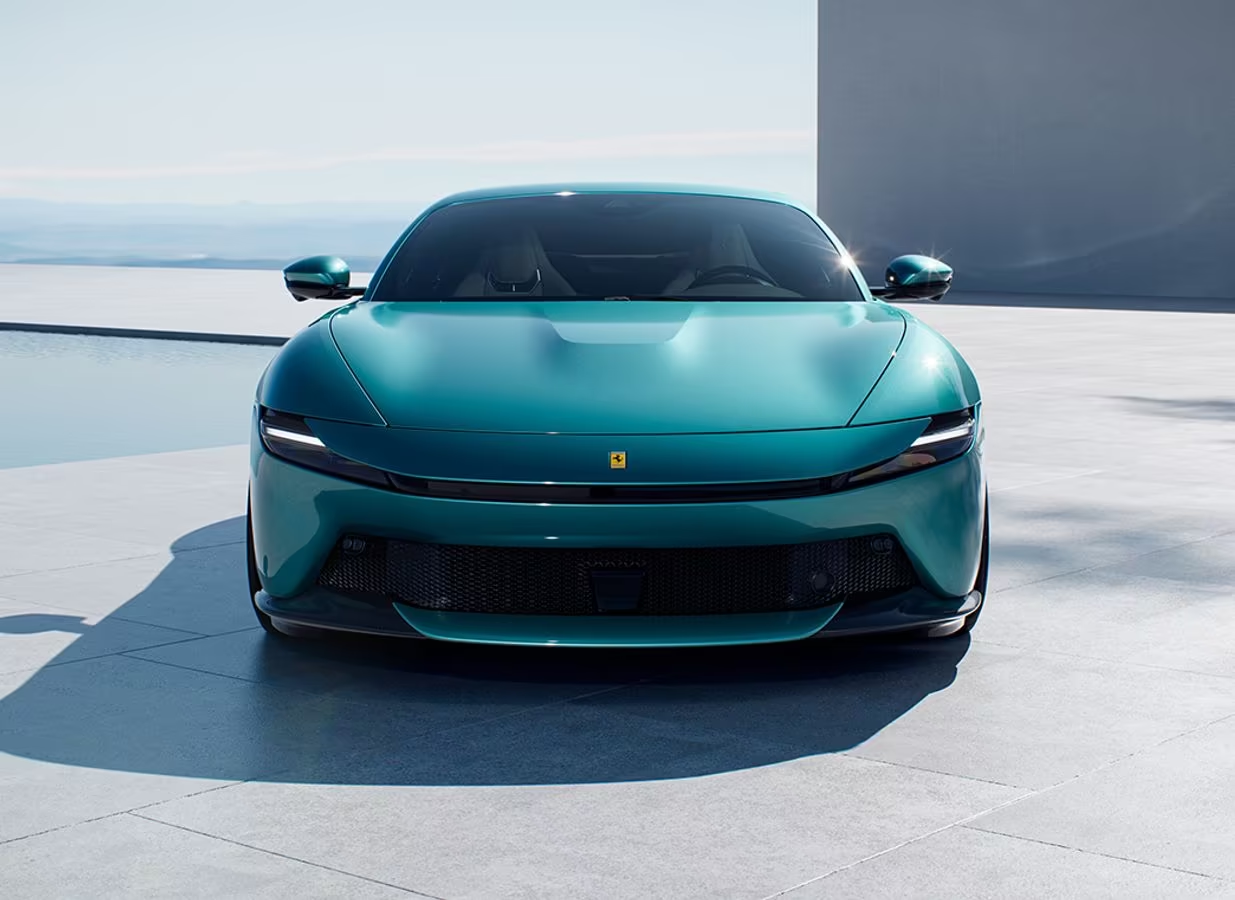
The naming follows a geography-linked tradition — the Amalfi Coast in southern Italy lending this grand tourer an identity that signals Italian character and coastal elegance, in contrast to the Roma’s urban reference. Whether the new name adds commercial differentiation or merely cosmetic positioning is a question Ferrari’s market performance will ultimately answer.
Powertrain: Familiar Engine, Meaningful Revisions
The Ferrari Amalfi is powered by an updated version of the 3.9-litre twin-turbocharged V8 engine from the F154 family. Output is increased to 640 PS, a gain of around 20 PS over the Roma, while torque remains at 761 Nm. Mechanical changes include revised turbochargers spinning up to 171,000 rpm, a new engine control unit, and a raised redline of 7,600 rpm.
The engine is described as more responsive and faster to rev. This additional responsiveness is paired with a revised exhaust and intake tuning, including a new proportionally controlled bypass valve with dedicated maps, to produce a more characterful sound compared to the Roma.
Performance figures stand at 0–100 kph in 3.3 seconds and a top speed of 320 kph. On paper, the Amalfi is outpowered by direct rivals such as the Aston Martin Vantage and the Porsche 911 Turbo. However, Ferrari has chosen not to pursue hybridisation for this model — a decision that preserves the driving character of a pure combustion powertrain and avoids the weight penalties that battery systems introduce. The 8-speed dual-clutch transmission carries over with recalibrated gearing, particularly in the lower ratios, for improved in-gear responsiveness.
Design: All-New Panels, Evolved Silhouette
The Ferrari Amalfi design retains a Roma-like GT silhouette with flush door handles and 20-inch wheels, but gets a redesigned front end and revised rear detailing.
The front fascia replaces the Roma’s divisive “cheese grater” grille with a cleaner mesh design and a slim black horizontal bar connecting the LED headlamps — a visual language consistent with Ferrari’s current family design direction seen on the 12Cilindri and Purosangue. Functional air intakes are integrated above the headlamps to aid engine cooling.
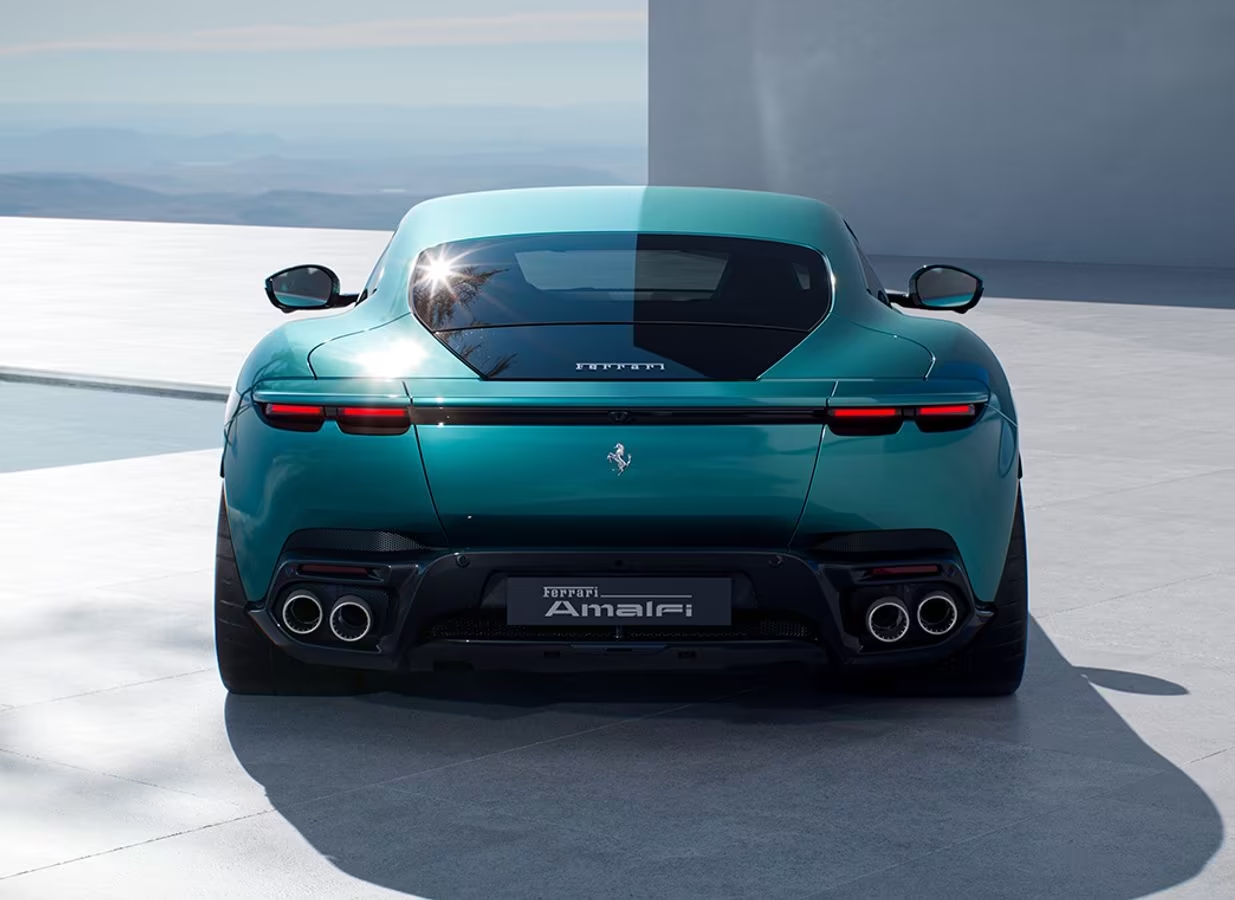
At the rear, an active rear spoiler operates in three positions: low drag, medium, and high downforce. When fully deployed, it produces 110 kg of downforce at 250 kph while adding less than four per cent drag. The spoiler has been repositioned to the edge of the tailgate compared to its placement on the Roma. The number plate housing has been moved down into the diffuser area, tidying the overall rear presentation. Quad exhaust tips remain a signature element.
The 20-inch wheels are machined from a single aluminium block, with a five-spoke design that conceals weight-saving perforations within each spoke — a detail that reflects Ferrari’s attention to both aesthetics and engineering efficiency.
Also Read:
Interior: Physical Controls Return
One of the most commercially significant changes inside the Amalfi is the return of physical buttons on the steering wheel. A welcome change is the return of physical steering controls, including the iconic red engine start/stop button. Ferrari’s previous generation of haptic-based steering wheel controls had drawn sustained criticism from customers, and the company has responded by reverting to tactile inputs — a move that Ferrari has confirmed can also be retrofitted to earlier models that received haptic controls.
The interior updates include a 10.25-inch landscape touchscreen with wireless Apple CarPlay and Android Auto, plus an 8.8-inch passenger display. The dashboard adopts the twin-cockpit layout familiar from the 12Cilindri, and the central tunnel is finished in anodised aluminium with a carbon fibre option available.
Some touch-based controls remain — mirror adjustments, lighting, and air conditioning are operated via the touchscreen, which is mounted relatively low on the dashboard. This placement requires the driver to divert attention from the road during operation, a compromise that is not unique to the Amalfi but is worth noting in a car intended for high-speed use.
Material quality is consistent with Ferrari’s premium positioning. The seats are described as snug with supportive bolstering, and suede door trims contribute to a premium cabin character. The 2+2 configuration’s rear seats are minimal in functional terms, best suited for luggage or very occasional short-distance use.
Practicality and Context
Boot space is adequate for a GT car of this type. The rear seats can be electrically folded to expand luggage capacity, and an underfloor storage area provides additional utility. A wireless charging pad and cupholder are present — practical amenities for a car that is intended, at least in part, for long-distance grand touring.
The nearest rival to the Amalfi in India is the Aston Martin Vantage, placed at ₹4.29 crore. The Amalfi’s higher price point reflects both its brand positioning and India’s import duty structure applied to fully imported vehicles. Over the Roma’s five-year tenure, 50 per cent of units sold globally went to first-time Ferrari buyers — a statistic that underlines how significant this segment is to Ferrari’s customer acquisition strategy.
Ferrari will continue selling the Roma Spider alongside the Amalfi until a drop-top version of the Amalfi is introduced. A convertible variant, expected to be called the Amalfi Spider, was anticipated for a reveal in March 2026. Whether and when that model arrives in India will be confirmed separately.
For the Indian market, the Amalfi coupe at ₹5.59 crore ex-showroom represents the starting point. Given Ferrari’s extensive options catalogue, final on-road costs for most buyers are likely to be considerably higher.