


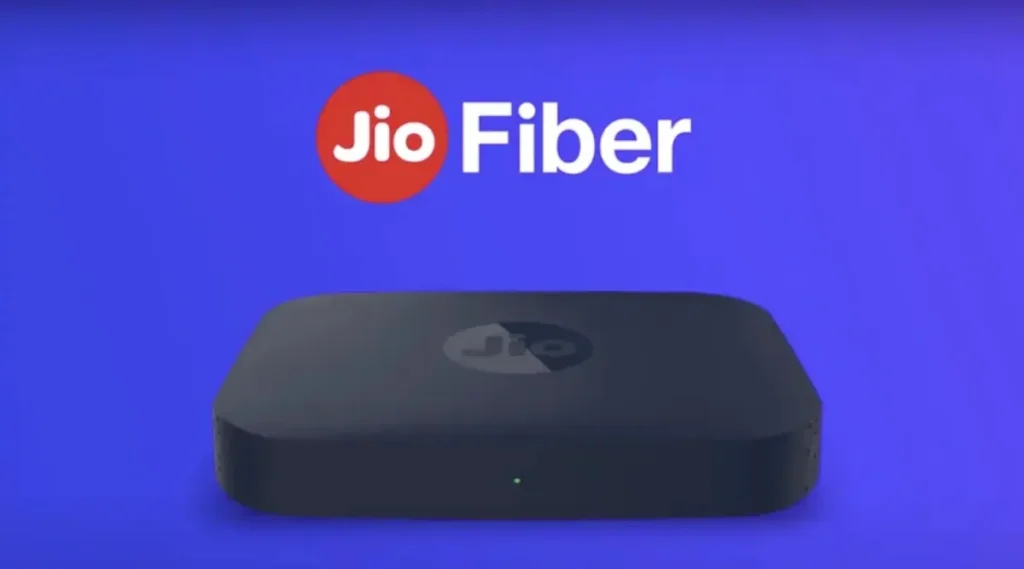
India — A major technical failure struck Jio Fiber’s network infrastructure on Sunday morning, April 12, 2026, cutting off broadband internet, WiFi, and fixed-line telephone services for lakhs of subscribers across the country. The outage, which began in the early hours of Sunday, simultaneously rendered the MyJio mobile application and Jio’s official website non-functional, removing the primary channels through which subscribers would ordinarily log complaints or check service status.
A senior Reliance Jio functionary confirmed the nationwide disruption when contacted, stating that technical teams were working to address the fault. No official public statement had been issued by the company, and no estimated restoration timeline was confirmed at the time of publication. Internal teams are reported to be treating the restoration as a priority, with the fault characterised in available reporting as a core network issue rather than a localised fibre cut — though this assessment has not been confirmed through an official company statement.
Services Affected and Nature of the Disruption
The outage encompasses three distinct service layers delivered through the Jio Fiber and AirFiber platforms: broadband internet access, WiFi connectivity distributed through home routers, and fixed-line voice calls routed over the fibre network using voice-over-IP technology.
The simultaneous failure of all three service types, combined with the unavailability of the MyJio application and the official Jio website, indicates a disruption at a level of the network architecture that affects both service delivery and the customer support interface concurrently. Third-party outage monitoring platforms DownDetector and NetBlocks recorded a sharp vertical spike in subscriber complaints beginning in the early morning hours of Sunday, consistent with the pattern of a sudden, large-scale network failure rather than a gradual degradation.
A common symptom reported by subscribers across affected cities was the appearance of a red signal light on Jio Fiber routers — an indicator of loss of connectivity at the network level — accompanied by the complete absence of internet and voice service. Users in affected areas described being without connectivity for several hours with no means to access official support channels.
Geographic Scope of the Outage
NetBlocks, the internet monitoring platform, confirmed disruptions affecting users across Chandigarh, Punjab, Odisha, Karnataka, Kerala, Telangana, Delhi, Madhya Pradesh, Gujarat, Maharashtra, Haryana, West Bengal, and Tamil Nadu. DownDetector recorded complaint spikes consistent with the same geographic distribution.
Consumer reports of service failure were received from major metropolitan areas including Delhi-NCR, Mumbai, Bengaluru, Hyderabad, Chennai, Chandigarh, and Pune, as well as from smaller cities and tier-2 centres across the affected states. The breadth of the geographic footprint distinguishes this event from a regional or local infrastructure failure and supports the characterisation of the disruption as a nationwide core network issue.
Localised service restoration was reported in some parts of southern India in the hours following the outage’s onset, according to available reporting — though this had not been confirmed through an official Jio statement at the time of publication and should be treated as unverified at the individual city level.
Impact on Subscribers: Communication and Work Disruption
The timing of the outage — a Sunday morning — placed particular strain on remote workers who depend on Jio Fiber for home-office connectivity, as well as on households that rely on fibre-based fixed-line calling as their primary voice communication service. The loss of fixed-line phone functionality is a dimension of the outage that extends beyond internet access to affect basic telephone communication for a subset of affected subscribers.
The outage also affected subscribers using Jio’s AirFiber platform, which delivers wireless home broadband through a fixed wireless access model. Combined with the Jio Fiber subscriber base, the Jio fixed broadband ecosystem serves millions of home and small business users nationwide.
The concurrent unavailability of the MyJio app and the official website removed the standard escalation pathway for affected users at the precise moment of greatest need. Subscribers were left with social media as the primary available channel for surfacing complaints, which contributed to the rapid trending of the hashtag #JioDown on X (formerly Twitter) within hours of the outage beginning. Irate consumer posts, screenshots of non-functional routers, and requests for service restoration updates dominated the conversation through the morning.
Also Read:
Official Response and Current Status
The only confirmed official communication on the outage, at the time of this report, came from a senior Reliance Jio functionary who acknowledged the nationwide disruption and indicated that technical teams were working to resolve the fault. The functionary did not provide a specific timeline for full service restoration or explain the root cause of the outage. No formal press statement or public advisory had been issued by Reliance Jio as of the time of publication.
Available reporting indicates that Jio’s technical teams are treating restoration as a high-priority operation and are working to isolate the source of the fault. The characterisation of the issue as a core network failure — as opposed to a physical fibre cut or localised equipment fault — suggests the resolution process may require intervention at a central infrastructure level, which typically takes longer to address than a localised outage. This assessment is drawn from available reporting and has not been confirmed by Reliance Jio.
Context: Second Major Disruption in April 2026
Sunday’s outage is the second significant service disruption to affect Jio in April 2026. An earlier incident this month resulted in severely degraded speeds and connectivity issues across both mobile and Jio Fiber connections, with users additionally reporting simultaneous unavailability of recharge systems and account portals during that episode.
The recurrence of large-scale disruptions within a single calendar month raises questions about the resilience of core network infrastructure and the adequacy of redundancy systems designed to prevent or contain such failures. Reliance Jio is India’s largest telecom operator by subscriber count, with more than 500 million subscribers across its mobile and broadband platforms. The public and economic significance of disruptions at this scale is substantial, given the extent to which both consumer and commercial activity is dependent on continuous broadband connectivity.
Whether the April 12 outage is connected in any technical sense to the earlier disruption this month has not been established in available information and is not asserted here.