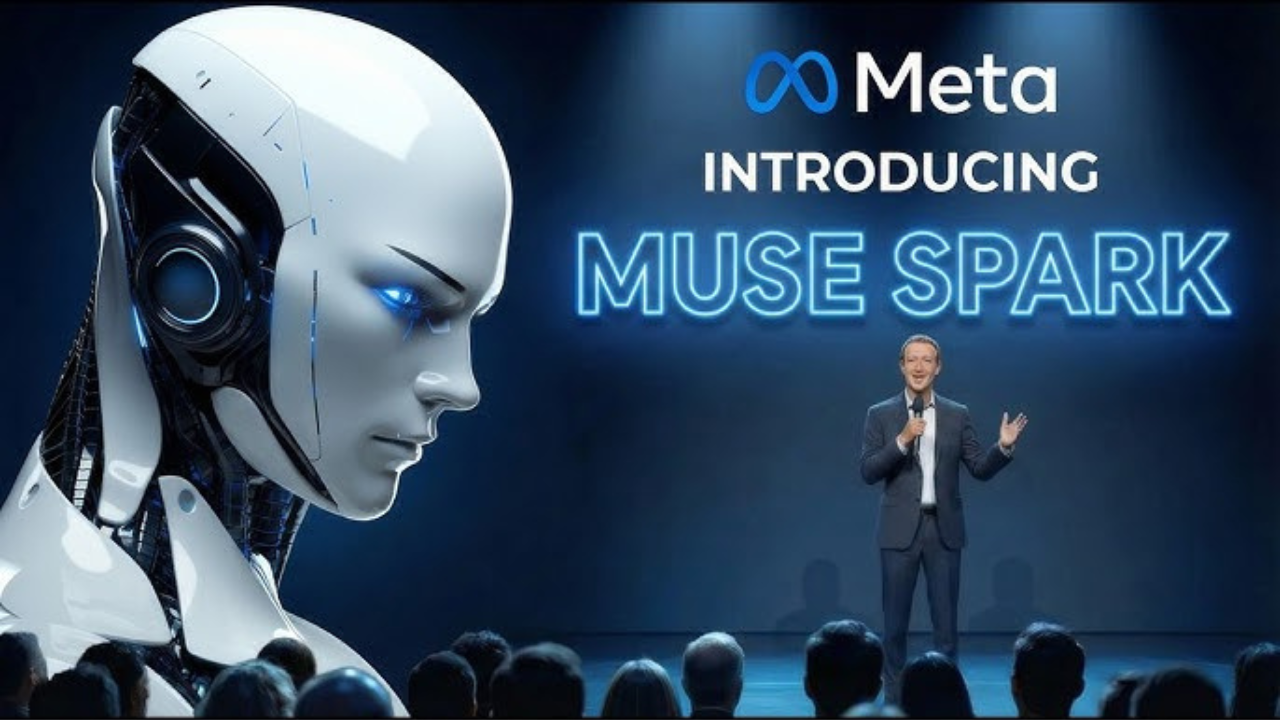


India — Meta Platforms has launched Muse Spark, the first model in its new proprietary Muse series, marking a significant departure from the company’s long-standing open-source Llama strategy and signalling an accelerated push toward monetising its artificial intelligence investments.
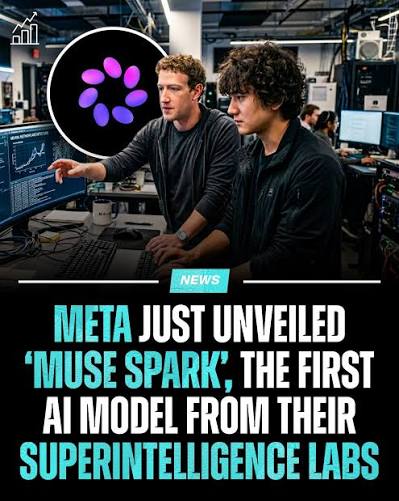
The launch is the first major AI model release under Alexandr Wang, whom Meta appointed as Chief AI Officer following a reported $14.3 billion investment in Scale AI, the data labelling company Wang co-founded. Under Wang’s leadership, Meta has restructured its AI development operations, shifting primary responsibility from its research-oriented Fundamental AI Research (FAIR) lab to a newly constituted product-focused unit called Superintelligence Labs.
Muse Spark currently powers the Meta AI assistant on meta.ai and the company’s standalone app. Meta has indicated the model is scheduled to replace Llama models across WhatsApp, Instagram, Facebook and Meta’s Ray-Ban smart glasses in the coming weeks, though no specific deployment timeline has been confirmed beyond that characterisation.
What Muse Spark Does
Meta has positioned Muse Spark as a “small and fast” model capable of handling complex reasoning tasks — a combination the company describes as central to its product integration goals. The model is natively multimodal, meaning it can process and respond to both text and images within a unified interface.
Demonstrated capabilities include the ability to estimate caloric content from a photograph of a meal and to superimpose three-dimensional objects — such as a piece of furniture — into a room image to assess spatial fit. Meta has also highlighted the model’s performance in science, mathematics and health-related queries as areas of relative strength compared with competing systems.
The model operates across three distinct modes. “Instant” mode is optimised for speed and handles routine queries. “Thinking” mode applies single-agent reasoning for more complex tasks such as legal document analysis or mathematical problem-solving. “Contemplating” mode, the most computationally intensive, orchestrates multiple sub-agents to perform what Meta describes as research-grade reasoning tasks.
Meta has not disclosed the parameter count or technical architecture of Muse Spark. The company has confirmed that larger, more capable iterations are already in development.
The Strategic Pivot: Closed Source and Commercialisation
Unlike the Llama series — which Meta released under open-source licences, allowing external developers to download, modify and deploy the models freely — Muse Spark is proprietary and closed-source. Meta retains full control over access and distribution.
This shift carries direct commercial implications. Meta has launched a Private API Preview for select corporate partners, signalling a move toward a usage-based revenue model comparable to those operated by OpenAI and Anthropic. Pricing has not been publicly disclosed at this stage.
The model also introduces a “Shopping Mode” that draws on behavioural data from Instagram and Facebook to generate personalised product recommendations. Meta has indicated it plans to monetise this feature through affiliate-style arrangements and AI-targeted advertising — an approach that leverages the company’s existing data infrastructure and advertising relationships in ways its open-source Llama models could not.
Reports have also emerged that Meta may eventually introduce a subscription fee for access to the Meta AI chatbot, though no formal announcement has been made. Such reports should be treated as unconfirmed at this stage.
Meta’s stock rose approximately nine percent following the announcement, with investors responding positively to the shift toward a more controlled, monetisable model architecture. The company has projected capital expenditure of between $115 billion and $135 billion on AI infrastructure in 2026, a figure that underscores the scale of financial commitment involved and the pressure on Muse Spark and subsequent models to generate commensurate revenue.
Also Read:
Criticism and Benchmark Limitations
The launch has not been without substantive criticism. François Chollet, creator of the Keras deep learning framework and a widely cited AI researcher, publicly described Muse Spark as a “disappointment,” arguing the model had been “overoptimised for public benchmark numbers at the detriment of everything else.” Chollet’s assessment centred on the view that benchmark performance does not reliably translate into real-world utility — a tension that has been a recurring point of debate in AI evaluation methodology.
Specifically, Muse Spark has recorded poor performance on the ARC AGI 2 benchmark, a test designed to measure an AI system’s ability to acquire new skills and reason beyond its training data — capabilities often cited as indicators of generalisation rather than pattern recall.
Wang responded to the criticism directly, acknowledging the model’s limitations on ARC AGI 2 while framing Meta’s disclosure of those results as an act of transparency rather than a concession of failure. He indicated that publishing benchmark shortcomings helps identify specific areas for iterative improvement and gives the broader research community an accurate picture of the model’s current capabilities. Wang also cited positive user feedback in areas including visual coding, writing assistance and general reasoning as evidence of real-world utility that benchmarks may not fully capture.
The divergence between benchmark performance and user experience is a known and unresolved challenge in AI evaluation. Neither benchmark scores nor user sentiment surveys constitute definitive measures of model capability, and both should be interpreted with appropriate caution.
Competitive Positioning and Vertical Focus
Rather than competing directly with OpenAI’s GPT series or Anthropic’s Claude in general-purpose coding — a segment where those companies have established significant leads — Meta appears to be pursuing a differentiated strategy centred on health, science and multimodal consumer applications.
The integration of Muse Spark into Ray-Ban Meta glasses represents a distinct use case: real-time visual assistance delivered through a wearable device, an area where Meta has few direct competitors at comparable scale of hardware distribution.
The degree to which Muse Spark’s deep integration into Meta’s family of apps — which collectively reach billions of users — constitutes a durable competitive advantage over technically superior but less embedded rivals remains an open question. Distribution scale and model capability are distinct variables, and the relationship between the two in determining commercial outcomes in the AI sector is still being established across the industry.
What is clear is that Meta has made a considered and public commitment to a closed, product-integrated AI strategy under Wang’s leadership — one that prioritises revenue generation and platform entrenchment alongside technical development. Whether that strategy produces returns commensurate with the company’s stated capital expenditure projections will become clearer as Muse Spark’s rollout across Meta’s app ecosystem progresses in the weeks ahead.