


India — Lexus India launched the ES 500e on March 20, 2026, marking the Japanese luxury brand’s entry into the dedicated battery-electric vehicle segment in the country. Priced at ₹89.99 lakh (ex-showroom) on an introductory basis, the ES 500e is imported as a Completely Built Unit (CBU) and is currently the only ES variant available in India — replacing the previous internal combustion engine model entirely in the local lineup.
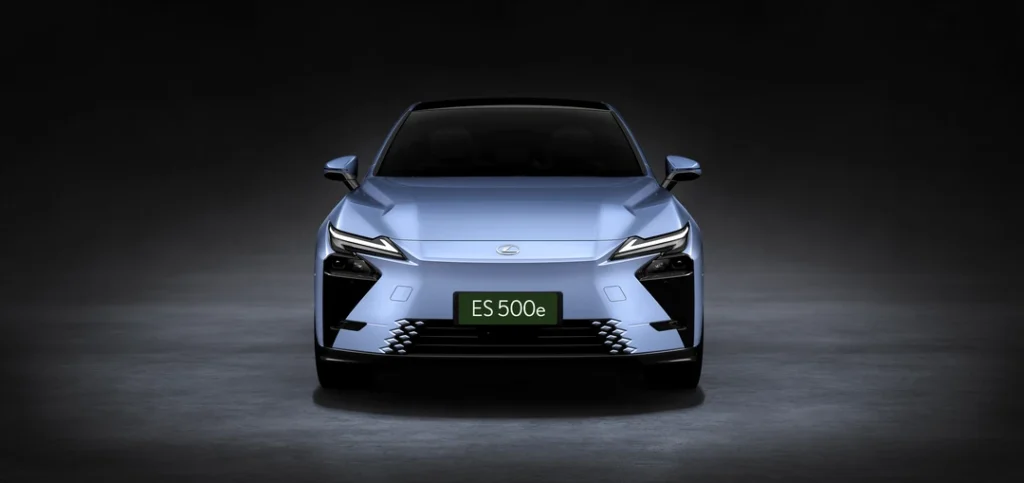
The ES 500e is also the first production vehicle to carry Lexus’s new design language, representing a significant departure from the aesthetic identity the brand has maintained for over a decade.
Design: A Clean Break From Convention
The ES 500e abandons the spindle grille that has defined Lexus’s visual identity since 2012. In its place, the front fascia adopts a blanked-off, flush surface with a lower intake incorporating diamond-pattern detailing. The L-shaped daytime running lights — a Lexus signature — are retained but split into two functions: the upper section serves as the DRL, while the lower acts as the turn indicator. LED headlights are recessed into the bumper, maintaining a clean profile.
The body sits on 21-inch aerodynamically optimised wheels and adopts what Lexus describes as a “spindle body” design philosophy — prioritising surface tension and straight-line precision over the ornate detailing of earlier generations. Gloss black trim runs through the exterior, including a lateral accent piece on the lower body panel.
The overall silhouette suggests a sportback form, but the ES 500e retains a conventional three-box boot — power-operated, wide-opening, and notably deep. The Lexus logo does not appear on the boot lid; instead, “LEXUS” lettering is embedded within the full-width LED tail lamp assembly, with turn indicators integrated into the lower bumper.
Flush door handles are fitted, though they operate differently from the motorised pop-out units seen on some competitors — the user manually locates a recessed button to release the door. Soft-close doors are included as standard.
The ES 500e is built on an entirely new platform. The wheelbase has grown by 80mm over the outgoing model, to 2,950mm, and the car is larger in all dimensions. Ground clearance has also been raised for the India-specification model — a market-specific adjustment that Lexus has applied given local road conditions.
Interior: Minimalism Replaces the Button-Heavy Cabin
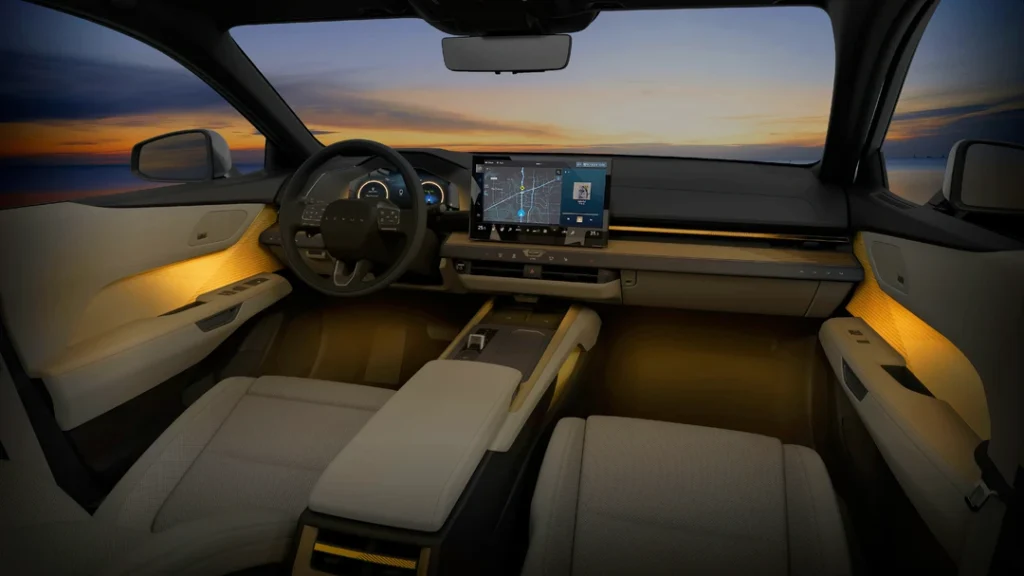
The cabin of the ES 500e is a substantive redesign compared to the outgoing ES. The previous generation’s dense physical control layout has been replaced by a largely uncluttered dashboard. A 14-inch touchscreen dominates the centre stack, paired with a 12.3-inch fully digital instrument cluster in an unusual pyramid-shaped housing rather than the conventional rectangular format.
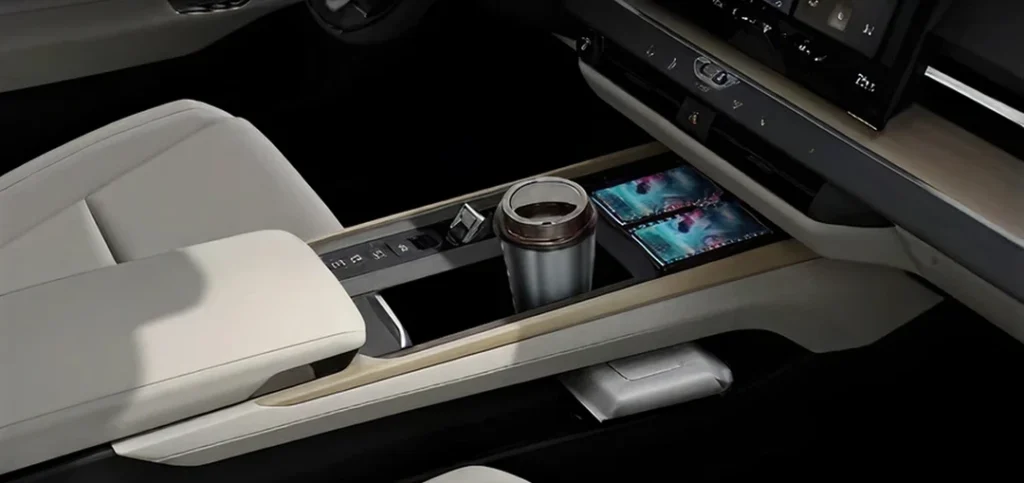
Physical controls for the HVAC system are retained as a horizontal row of buttons that illuminate when the vehicle is active — a design choice that balances minimalism with usability. A rotary volume knob is also present. The gear selector is a compact toggle unit. The centre console includes two wireless charging pads, twin cup holders, and a storage bin.
The steering wheel is a three-spoke unit and, like the boot lid, carries “LEXUS” lettering rather than the brand logo. Controls on the steering wheel are physical buttons — not haptic touch — that illuminate on contact.
Material quality is consistent with Lexus’s luxury positioning: the wood finish uses a bamboo-derived trim that runs through the dashboard and into the rear cabin, where it frames ambient lighting elements.
Standard equipment includes a 17-speaker Mark Levinson premium audio system, wireless Apple CarPlay and Android Auto integration, front seat heating and ventilation, and a head-up display.
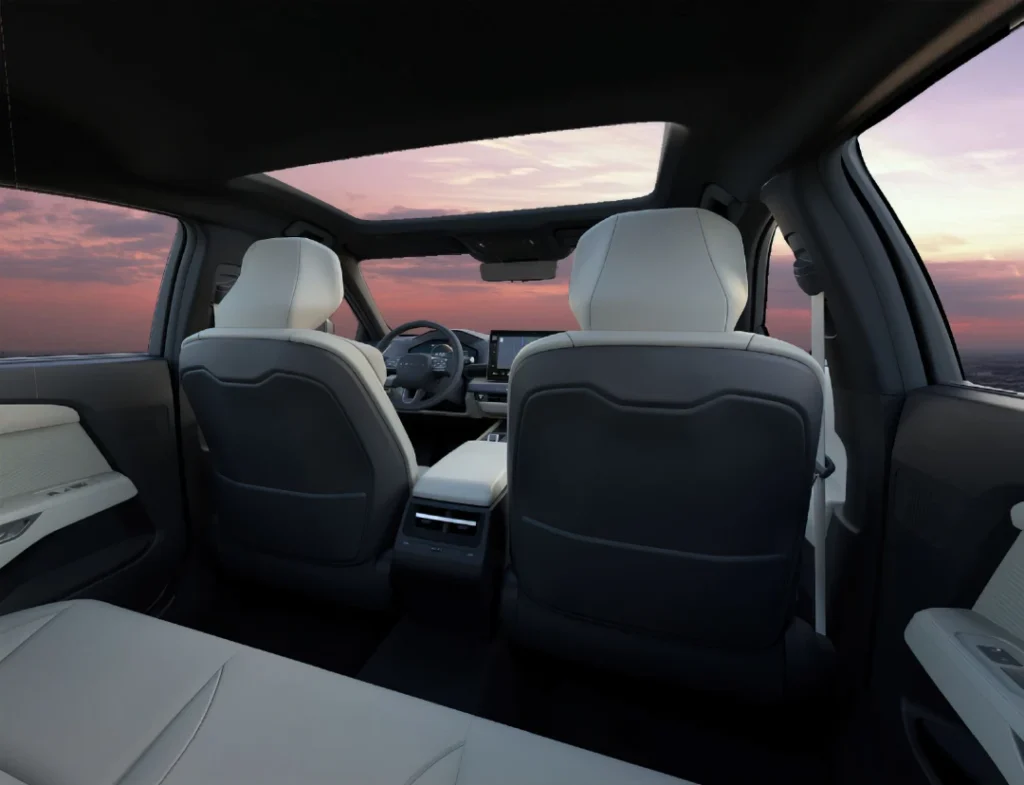
The sunroof is a standard unit rather than a panoramic design — a specification choice that may be noted by buyers accustomed to the larger glass roofs offered by some segment rivals.
Also Read:
Rear Seat: More Room, Fewer Controls
Given that a significant portion of Lexus ES buyers in India are chauffeured, rear cabin space is commercially relevant. The longer wheelbase translates to a meaningful increase in knee room, and headroom is described as generous. Thigh support is adequate, though occupants sit in a slightly elevated knee position due to the battery pack beneath the floor — a characteristic common across most EV platforms in this configuration.
One notable omission is the rear seat recline function. The previous ES offered a dedicated rear control panel that allowed passengers to adjust their seat angle independently; this has been removed from the ES 500e. Rear window sunshades are retained, and ambient lighting integrated into the bamboo trim gives the cabin a premium atmosphere.
Powertrain and Range
The ES 500e is powered by a 74.68 kWh lithium-ion battery pack driving a dual-motor all-wheel-drive system. Total system output is rated at 338 bhp (252 kW) and 438 Nm of torque, with a claimed 0–100 km/h time of 5.5 seconds. ARAI-certified range is stated at 580 km on a single charge.
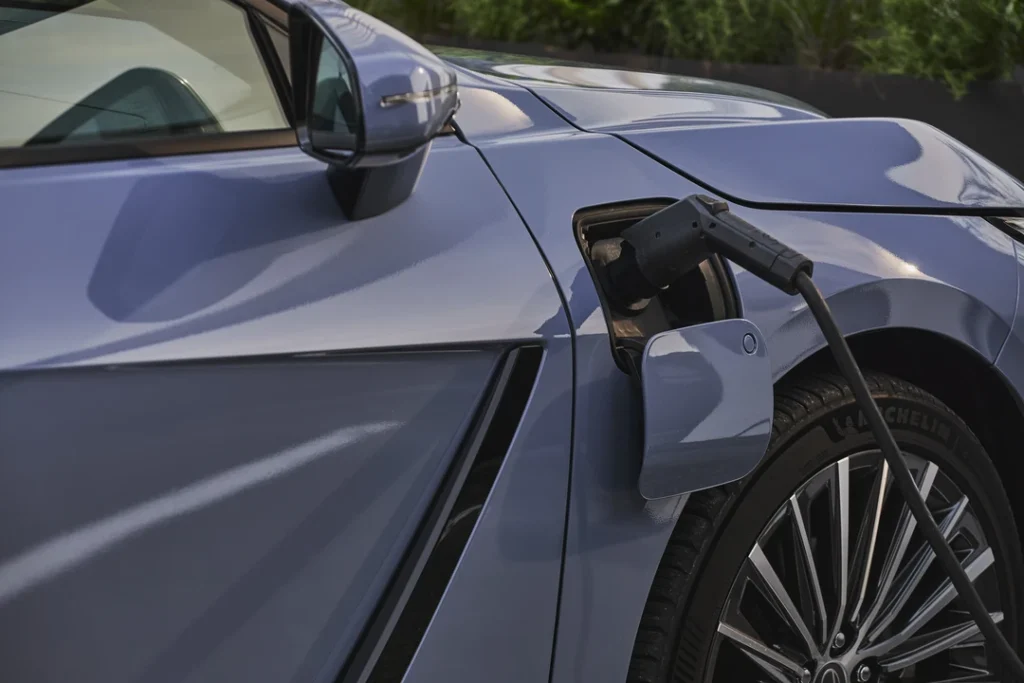
The vehicle supports high-speed DC charging, though Lexus India has not publicly detailed charging speed specifications in the material reviewed for this article. The battery is backed by an eight-year or 200,000 km warranty — a commitment that provides a degree of long-term ownership assurance for buyers in a segment where battery longevity is an active consideration.
Safety and Driver Assistance
The ES 500e’s safety suite includes radar-guided adaptive cruise control, lane change assist, and blind spot monitoring, among other features consistent with the ADAS packaging typical of luxury vehicles at this price point.
Market Context
The ES 500e enters a growing but still nascent luxury EV segment in India. At ₹89.99 lakh ex-showroom, it is positioned below the Mercedes-Benz EQE and BMW i5, while competing broadly with vehicles such as the Volvo ES90 and other premium electric sedans imported as CBUs.
The CBU import route means the ES 500e is subject to India’s applicable customs duties on fully built vehicles, a structural cost factor that influences pricing across all vehicles in this category. Lexus has not indicated plans for local assembly at this stage; the introductory price is subject to revision, and prospective buyers are advised to confirm current pricing and availability with authorised Lexus India dealerships.
Bookings are open across Lexus India’s dealership network.
Assessment
The ES 500e is a substantive product evolution for Lexus in India — moving from a hybrid-focused luxury saloon to a dedicated EV with meaningful performance credentials and a range figure that addresses one of the primary concerns in the segment. The design and interior direction represent a deliberate repositioning toward a younger, technology-oriented buyer profile, though the removal of rear seat recline and the choice of a standard sunroof over a panoramic unit may be points of comparison for buyers cross-shopping alternatives.
As Lexus’s first dedicated electric vehicle in the Indian market, the ES 500e establishes a new baseline for the brand’s EV ambitions locally. Whether that translates into sustained commercial traction will depend, in part, on charging infrastructure development and the brand’s ability to grow its service and support network alongside its EV portfolio.