

New Delhi — Nothing’s Phone (4a) Pro, the British consumer technology company’s most premium mid-range device for 2026, went on sale across India on March 13, with wider retail availability expanding by March 27. The device is priced starting at ₹39,999 for the base 8GB RAM and 128GB storage variant, and is available through online, offline, and the company’s official stores.
The launch comes at a pivotal moment for Nothing. Chief Executive Carl Pei has announced that the company will not release a flagship model in 2026, making the Phone (4a) Pro the brand’s premium offering this year. That strategic decision has concentrated the company’s engineering resources into the 4a Pro — and the device reflects that focus in ways both visible and technical.
A Design Break That Divides Opinion
The most immediately striking aspect of the Phone (4a) Pro is what it is not: it no longer carries Nothing’s signature translucent back panel. The Phone (4a) Pro features a metal body with a semi-transparent design concentrated in the upper portion of the back panel, a notable departure from the exposed-element aesthetic that defined previous Nothing phones.
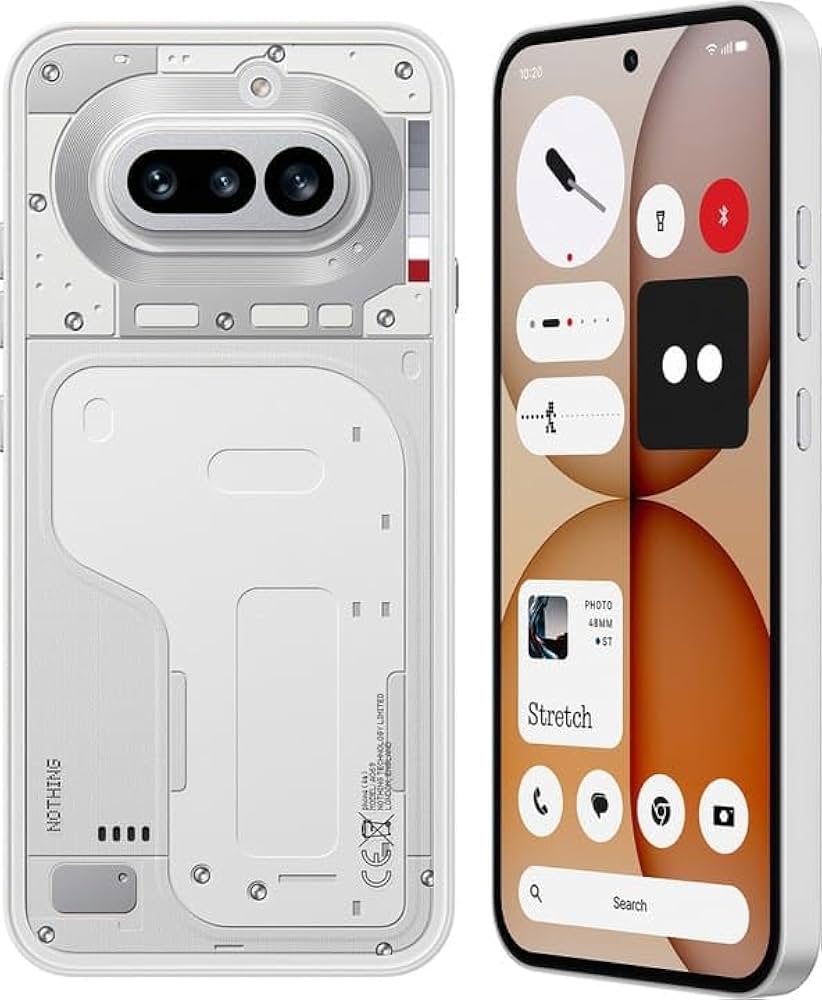
While the standard Phone (4a) retains the brand’s transparent design with a new Glyph Bar, the Pro variant ditches the translucent back entirely and now features a Glyph Matrix — a denser LED arrangement inherited from the Phone (3) series. The Glyph Matrix on the 4a Pro houses 137 mini-LEDs, according to the reviewer briefing, and can be customised for specific contacts, visual timers, and notification patterns.
The phone measures 7.95mm at its thinnest, making it Nothing’s slimmest device to date. It is available in Black, Silver, and Pink.
For longtime Nothing users, the shift is jarring. For the broader market, it may be exactly the point. The design signals a deliberate repositioning — away from niche tech-enthusiast appeal and toward a wider audience.
Display and Performance: Meaningful Upgrades
The Phone (4a) Pro features a 6.83-inch 1.5K AMOLED display with a 144Hz refresh rate, 5,000 nits of peak brightness, Gorilla Glass 7i protection, and an IP65 dust and water resistance rating.
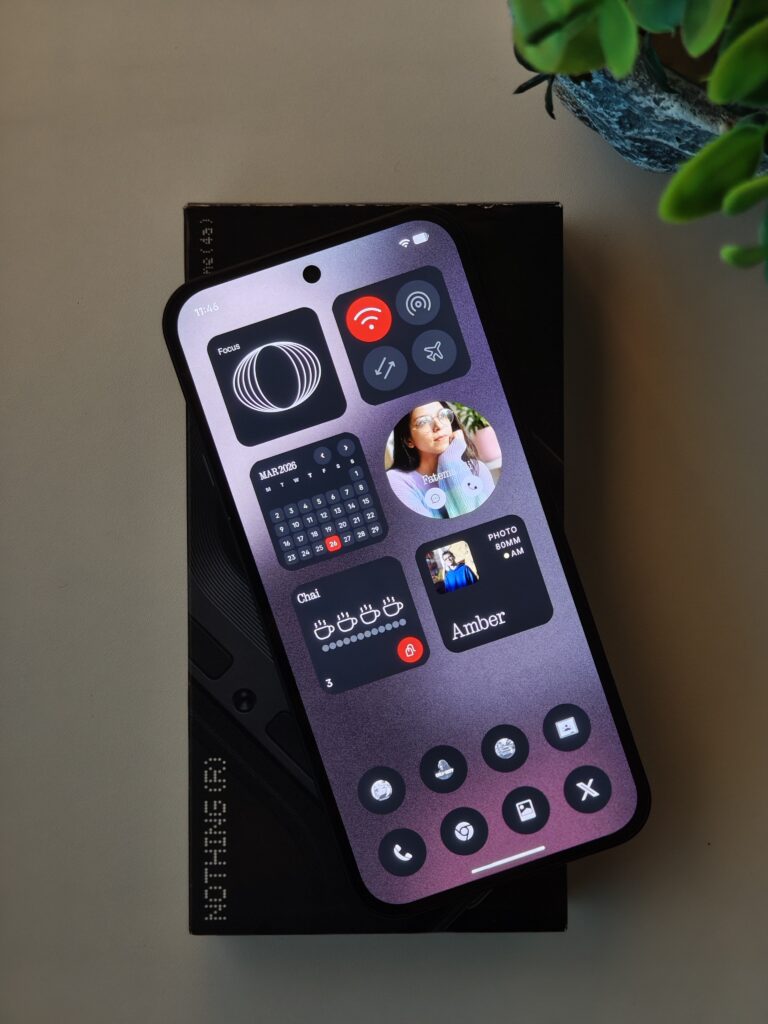
The 144Hz refresh rate is a first for any Nothing device. Previous models — including the company’s most expensive phones — were capped at 120Hz. In practice, the upgrade delivers noticeably smoother scrolling and animation across the interface, though gaming at the full 144Hz remains limited to a handful of titles. Most applications and games run at 120Hz, with the higher rate reserved for specific supported software.
The Phone (4a) Pro is powered by the Snapdragon 7 Gen 4 SoC, which offers modestly higher core speeds compared to the Snapdragon 7s Gen 3 found in last year’s Phone (3a) Pro. The improvement is incremental rather than transformative — users carrying out everyday tasks and moderate gaming are unlikely to notice a dramatic difference. More demanding games such as BGMI run at up to 120 frames per second on standard settings.
One comparative consideration worth flagging: at this price point, competing devices are available with higher-tier chipsets. The Snapdragon 7 Gen 4 is a capable mid-range processor, but buyers prioritising raw processing power over design and software will find alternatives in the market. Nothing’s differentiation here lies elsewhere.
Camera: Headline Numbers and Real-World Nuance
The camera system is the Phone (4a) Pro’s most commercially prominent feature. The triple rear setup is led by a 50MP Sony LYT-700c sensor with optical image stabilisation, paired with a 50MP periscope telephoto camera offering up to 140x Ultra Zoom, and an 8MP ultrawide. A 32MP front camera handles selfies.
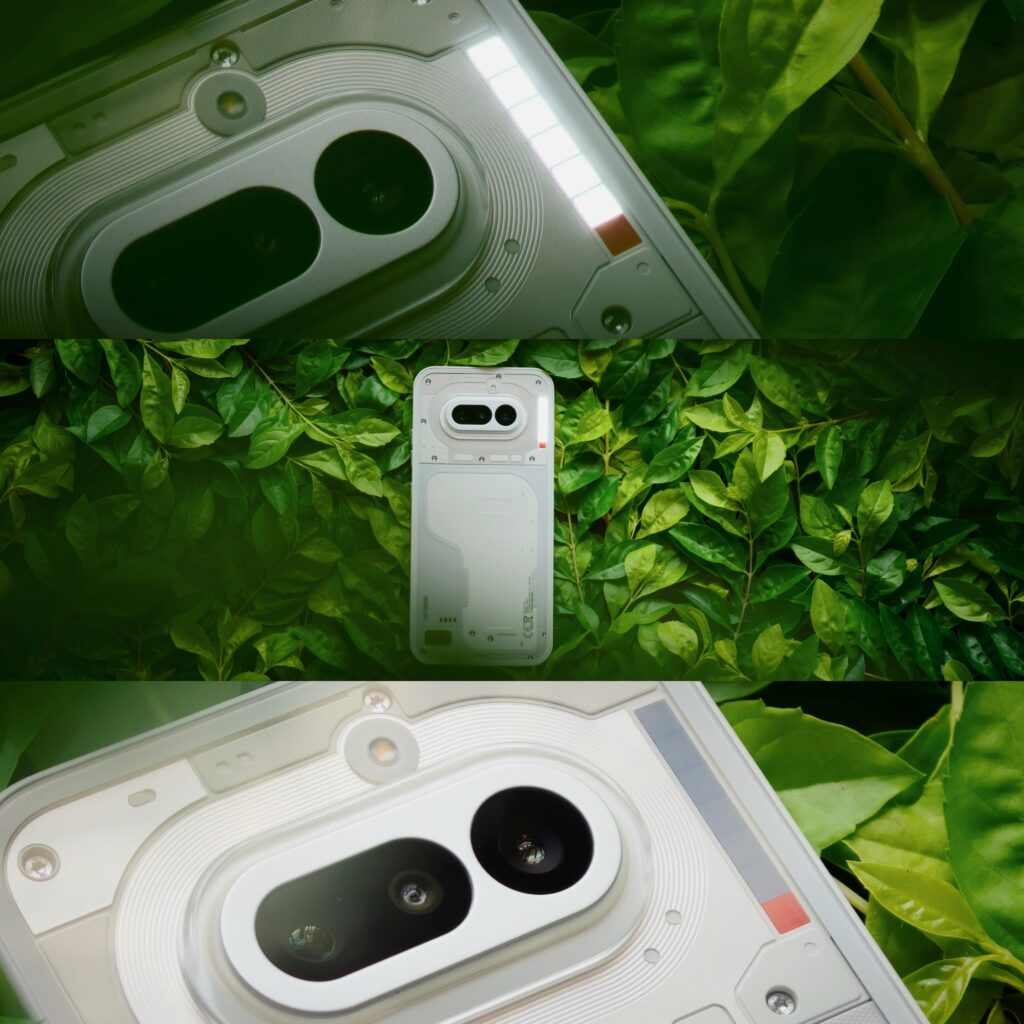
The 140x zoom figure — claimed as a world-first for a smartphone at retail — warrants careful contextualisation. Nothing’s official product page states that “up to 140x includes digital zoom” and that “results may vary,” a qualification that reflects the technical reality: beyond approximately 30x to 60x magnification, digital zoom images are typically not suitable for detailed photography. At 140x, subjects are identifiable in shape and position but not in fine detail. The feature is of limited practical value for photography but may serve as a useful spotting or framing aid at distance.
The periscope lens upgrade from a 3x to a 3.5x optical zoom is the more consequential improvement at practical zoom ranges. In hands-on comparisons with the Phone (3a) Pro, the 4a Pro demonstrates improved HDR management — particularly in portrait scenarios where previous Nothing devices produced an unwanted bright halo effect around subjects photographed against bright backgrounds. That specific artefact has been largely addressed.
Color rendering has also been recalibrated, with images appearing more vivid and naturally saturated than prior models. Primary camera performance in standard shooting conditions represents a meaningful step forward from last year’s lineup, though Nothing’s camera processing continues to apply mild skin smoothing — a tuning choice that some users may find preferable and others may not.
The selfie camera has been reduced from 50 megapixels to 32 megapixels in the move from the 3a Pro to the 4a Pro — a specification change that does not necessarily indicate reduced image quality, as processing and sensor design are as consequential as raw resolution, but it is a number worth noting for those who prioritise the front camera.
Also Read:
Software and the Essential Key
The Phone (4a) Pro runs Nothing OS 4.1 on Android 16 out of the box, with a commitment of three years of Android OS updates and six years of security patches. The software experience remains intentionally clean — no pre-installed third-party applications, and a UI that prioritises speed and usability over feature accumulation.
The Essential Key — a dedicated hardware button on the left side of the device — has been expanded in function. A short press opens Essential Space, Nothing’s quick-capture hub. A long press simultaneously captures a screenshot and records a voice note tied to it. The key can also be programmed to filter notifications by keyword, allowing users to receive alerts only when a specified term appears in notification text.
Nothing has also announced a new AI feature called Essential Voice, which converts speech to structured text — removing filler words and adapting tone for messages, emails, or formal writing — available across 12 languages including English and Hindi, to be rolled out via an over-the-air update shortly after launch.
Pricing and Market Position
As part of the launch offer, bank discounts of up to ₹4,000 are available on the Phone (4a) Pro, with exchange bonuses and no-cost EMI options across select partners. Nothing states that combined offers could bring the effective price of the Pro down to ₹34,999.
Nothing has attributed the price increase over last year’s models partly to component shortages. The Phone (3a) Pro launched at a lower price point, and the jump to ₹39,999 as a base price positions the 4a Pro more squarely against established upper mid-range competition from OnePlus, Samsung, and Motorola — brands with deeper retail networks and longer track records in this segment.
The Phone (4a) Pro’s case rests on a combination of factors that individually are not unique to Nothing but collectively define the brand: a distinctive aesthetic, clean software, a novel hardware interface in the Glyph Matrix, and a strong display-to-price ratio. Whether the design gamble — abandoning the translucent back that made Nothing phones recognisable — pays off commercially is a question that sales data over the coming quarters will answer.
So what’s the point?
The Nothing Phone (4a) Pro is a thoughtfully upgraded device that reflects a company in deliberate transition. The display is the best Nothing has shipped. The camera system is the most capable the brand has offered at this price. The software is mature and meaningfully differentiated. The design is divisive by intent.
What it is not is a specification outlier. At ₹39,999, buyers are paying a premium over comparable chipset performance available elsewhere. They are paying, in part, for identity — a brand position that Nothing is actively trying to broaden without losing the quality signal that built its early reputation.