


You’ve probably already owned a portable Bluetooth speaker that lived at the bottom of your bag, forgotten until you needed it. But if you haven’t kept up with how much the category has evolved in 2026, you’re missing out on some genuinely useful upgrades. The JBL Go 5 isn’t just a marginal refresh — it brings AirTouch stereo pairing, AI-powered sound optimisation, and noticeably better audio into a palm-sized package that costs less than a night out. In this guide, we’ll break down every feature, every spec, and every reason the Go 5 deserves a serious look.
Key Takeaways
- The JBL Go 5 delivers deeper bass than its predecessor, thanks in part to a redesigned hollow contour logo that improves acoustic output and performance.
- AirTouch technology enables instant stereo pairing by simply touching two JBL Go 5 speakers together — no menus, no app required.
- AI-powered SmartEQ Mode automatically adjusts sound settings for music or speech, switching profiles when you change content types.
- Battery life reaches up to 8 hours, with an additional 2 hours available through Playtime Boost mode — a step up from the fourth-generation model.
- IP68 water and dust resistance makes the Go 5 genuinely capable of handling outdoor use, beach trips, and everyday bag-throwing chaos.
- Auracast Bluetooth support allows the Go 5 to connect with multiple compatible JBL speakers for expanded multi-room or group audio setups.
- The Go 5 launches alongside the JBL Xtreme 5, with both models sharing SmartEQ, Auracast, and updated design language for 2026.
What Is the JBL Go 5?
The JBL Go 5 is a palm-sized portable Bluetooth speaker released in 2026, featuring AI-powered SmartEQ, AirTouch stereo pairing, IP68 waterproofing, and up to 10 hours of total battery life, positioned as JBL’s compact grab-and-go option in its fifth-generation speaker lineup.
The Go 5 sits at the smaller end of JBL’s 2026 speaker refresh, which also includes the significantly larger JBL Xtreme 5. While the Xtreme 5 targets users who want room-filling sound and extended sessions, the Go 5 is designed for portability first — a speaker small enough to pocket but capable enough to replace your phone’s speakers entirely.
JBL has built its reputation on getting the portable speaker form factor right, and the Go 5 continues that trajectory. This is not a speaker that exists to pad out a product line. Each upgrade in the fifth generation — from the acoustic redesign to the AirTouch pairing system — addresses a real-world friction point that owners of previous Go models have experienced.
Why Does the JBL Go 5 Matter in 2026?
The JBL Go 5 matters in 2026 because portable Bluetooth speakers have shifted from convenience accessories to primary listening devices, and the Go 5 addresses the three biggest gaps in compact speaker performance: audio quality, pairing friction, and intelligent sound adaptation.
Portable speakers have crossed a threshold. They are no longer backup devices — they are the default audio output for a growing number of users who have stopped routing audio through phone or laptop speakers entirely. As that shift has happened, the bar for what a compact speaker needs to deliver has risen sharply.
The Go 5’s combination of AirTouch, SmartEQ, and IP68 means it competes credibly not just on portability but on functionality that previously required spending significantly more. For the segment of buyers who want reliable, intelligent, weather-resistant audio in a device they can carry anywhere, the Go 5 hits the practical brief more completely than most competitors at its size.
What Are the Key New Features of the JBL Go 5?
The JBL Go 5 introduces three significant new features in 2026 — AirTouch stereo pairing, AI SmartEQ Mode, and a redesigned hollow contour logo — each targeting a specific improvement over the fourth-generation model in usability, audio performance, and connectivity.
AirTouch: Instant Stereo Pairing Without the Setup Friction
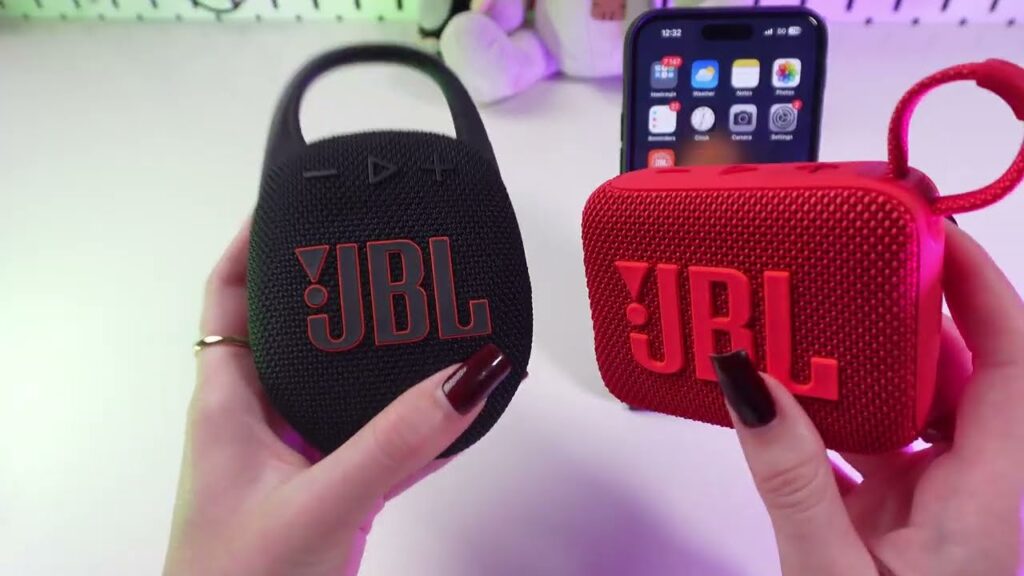
AirTouch is a new proximity-based pairing technology that allows two JBL Go 5 speakers to enter stereo mode simply by touching them together. No menus, no app navigation, no multi-step Bluetooth pairing process — physical contact between two Go 5 units initiates the stereo connection automatically.
For context, multi-speaker stereo pairing on portable Bluetooth speakers has historically been a frustrating process. Most systems require opening a companion app, navigating a pairing menu, and waiting through a handshake sequence that can fail if the devices are too far apart or if firmware is outdated. AirTouch removes that entire sequence. The practical result is that owning two Go 5 speakers and using them in stereo actually becomes a realistic everyday behaviour rather than an occasional novelty.
AirTouch is exclusive to the Go 5 in this generation of JBL speakers and represents one of the clearest differentiators between the compact model and the larger Xtreme 5, which relies on the standard JBL app or on-unit button for multi-speaker pairing.
AI SmartEQ Mode: Automatic Sound Profile Switching
SmartEQ Mode is an AI-powered feature that automatically detects whether you are listening to music or speech and adjusts the speaker’s equalisation profile accordingly — switching between optimised settings without any manual input from the user.
The practical scenario this addresses is a common one. You are listening to music through your Go 5, then switch to a podcast or a video call. The frequency balance that makes music sound full and warm — boosted bass, elevated highs — is not the same balance that makes speech sound clear and intelligible. SmartEQ detects the content switch and adjusts the output profile in real time.
Both the JBL Go 5 and the Xtreme 5 include SmartEQ, making it a generational feature across JBL’s 2026 lineup rather than a premium-only addition. This is a meaningful decision — it means the technology reaches users at every budget level rather than being locked behind the more expensive model.
Hollow Contour Logo: Acoustic Design, Not Just Aesthetics
The redesigned hollow contour logo on the JBL Go 5 is an acoustic engineering decision, not purely a visual one. The hollow structure is designed to improve sound output and overall performance by modifying the acoustic behaviour of the speaker enclosure.
This is the kind of design detail that is easy to overlook but reflects the incremental precision that separates a genuinely improved product from a cosmetic refresh. The Go 5’s predecessor delivered competent audio for its size; the fifth generation uses every available surface — including the logo — to extract more performance from the same compact form factor.
Also Read:
How Does the JBL Go 5 Sound Compared to Previous Models?
The JBL Go 5 produces deeper bass and higher volume output than the Go 4, achieved through a combination of the redesigned acoustic architecture and the new hollow contour logo, with SmartEQ Mode providing further optimisation based on content type.
Deeper bass in a palm-sized speaker is a meaningful claim because compact enclosures are physically constrained in their ability to reproduce low frequencies. The Go 5’s acoustic redesign addresses this constraint directly, rather than simply boosting bass frequencies electronically — which would increase perceived warmth but also introduce distortion at higher volumes.
For comparison, the JBL Xtreme 5 — the larger sibling in the same 2026 lineup — achieves approximately 10% deeper bass and louder sound than the Xtreme 4 through a revamped design featuring dual tweeters and a dedicated subwoofer. The Go 5’s improvements are proportionally similar for its size class, representing a meaningful rather than marginal audio upgrade.
| Feature | JBL Go 4 | JBL Go 5 |
|---|---|---|
| Bass Performance | Standard | Deeper (hollow contour design) |
| SmartEQ | No | Yes (AI-powered, auto music/speech) |
| Stereo Pairing | App/button | AirTouch (touch-to-pair) |
| Battery Life | ~7 hours | ~8 hours + 2hr Playtime Boost |
| Auracast Support | No | Yes |
| IP Rating | IP67 | IP68 |
| Ambient Lighting | No | Yes |
What Is the Battery Life of the JBL Go 5?
The JBL Go 5 offers approximately 8 hours of playback on a single charge, with an additional 2 hours available through Playtime Boost mode, bringing the total potential listening time to approximately 10 hours — a modest but genuine improvement over the fourth-generation model.
Playtime Boost is a power-conservation mode that extends battery life by making minor adjustments to output levels and processing — a trade-off between total runtime and maximum performance that is worth activating when you are away from a charger for an extended period.
For a full day out, 8 to 10 hours is a practical ceiling that covers most real-world use cases — a day at the beach, a long journey, a garden gathering, or a multi-hour work session. Users needing all-day sound across longer events would likely find the JBL Xtreme 5’s 24-hour battery (plus 4 hours Playtime Boost) a more appropriate choice.
Is the JBL Go 5 Waterproof and Durable?
The JBL Go 5 carries an IP68 rating, meaning it is fully protected against dust ingress and capable of withstanding submersion in water beyond the standard IP67 threshold, making it one of the more durable options in the compact portable speaker category.
IP68 is the highest standard in the IP (Ingress Protection) rating system for consumer electronics. An IP68-rated device can be submerged in water at a depth and duration specified by the manufacturer, beyond the 1-metre/30-minute benchmark of IP67. For a portable speaker used outdoors, poolside, or in unpredictable weather, this distinction matters.
In practical terms, IP68 means the Go 5 handles rain, splashes, pool edges, beach sand, and the general chaos of being stuffed into a bag without requiring any protective casing or special handling. Combined with the compact form factor and AirTouch pairing, the Go 5 is designed to be genuinely taken anywhere without hesitation.
What Is Auracast and How Does It Work on the JBL Go 5?
Auracast is a Bluetooth broadcast standard that allows a single audio source to stream simultaneously to multiple Bluetooth receivers, and the JBL Go 5 supports Auracast, enabling connection with multiple compatible JBL speakers for expanded group or multi-room audio setups.
Auracast support is available across JBL’s 2026 speaker lineup, including both the Go 5 and the Xtreme 5. Users can connect compatible JBL units either via an on-unit button or through the JBL companion app, building out a networked speaker setup without requiring a dedicated smart home hub or proprietary ecosystem lock-in.
For Go 5 owners, Auracast opens up two practical configurations: pairing with a second Go 5 via AirTouch for stereo, or connecting to a larger JBL unit — such as the Xtreme 5 — to extend audio coverage across a larger space. This flexibility makes the Go 5 a viable entry point into a scalable JBL speaker setup rather than a standalone device.
How Does the JBL Go 5 Compare to the JBL Xtreme 5?
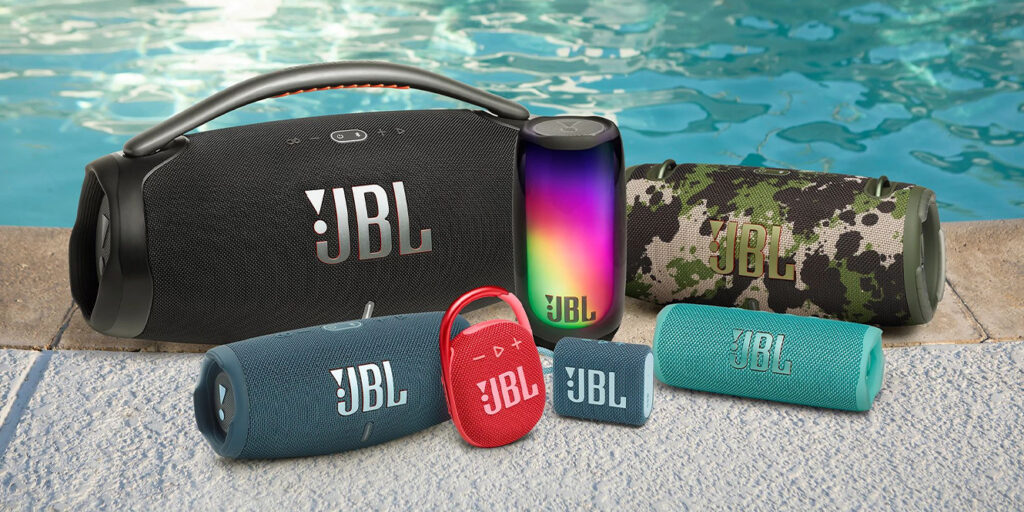
The JBL Go 5 and JBL Xtreme 5 are complementary products in JBL’s 2026 lineup — the Go 5 optimised for portability and compact use, the Xtreme 5 designed for higher output, extended battery, and room-filling sound — sharing SmartEQ and Auracast but differing significantly in size, power, and price.
The Xtreme 5 is the boombox-class option, featuring dual tweeters, a dedicated subwoofer, approximately 10% deeper bass than its predecessor, and up to 24 hours of battery life. It is a speaker designed to be the centrepiece of a setup, with ambient edge lighting across multiple modes and a larger enclosure that delivers a categorically different listening experience.
The Go 5 is for users who prioritise portability above all else. It fits in a hand, goes anywhere, pairs instantly via AirTouch, and delivers audio quality that has no business being as good as it is at its size. Both speakers serve real needs — the choice between them is a question of use case, not quality.
How to Get the Most Out of Your JBL Go 5: Practical Tips
Getting the most out of the JBL Go 5 means using AirTouch for instant stereo, enabling SmartEQ for content-aware sound, activating Playtime Boost when away from a charger, and downloading the JBL app to access Auracast multi-speaker configurations and firmware updates.
Here are five practical steps to maximise your Go 5 experience:
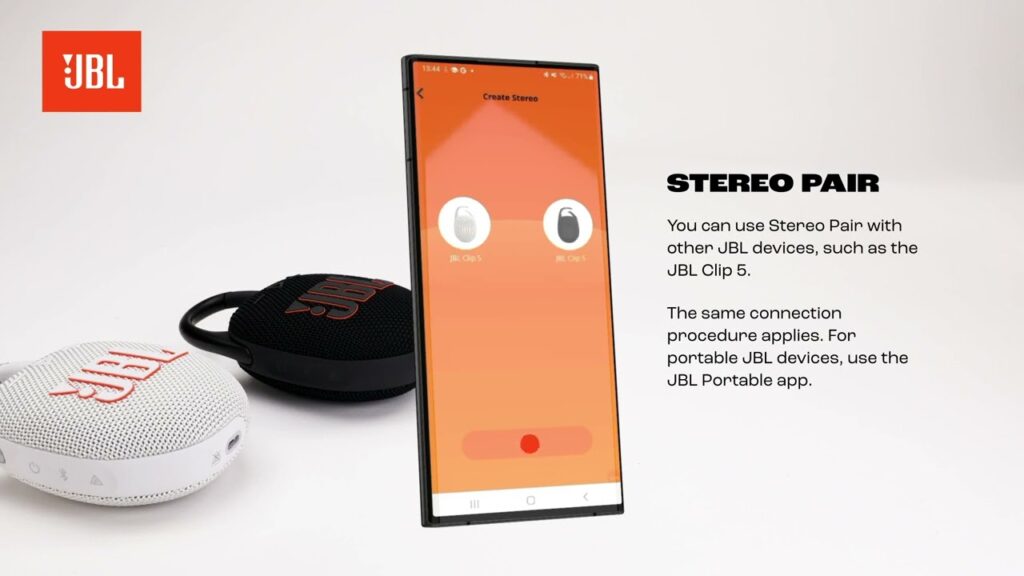
- Pair two Go 5 units via AirTouch for immediate stereo without opening any app — simply touch the two speakers together until the pairing tone confirms connection.
- Let SmartEQ run automatically — there is no manual adjustment needed, but ensure it is enabled in the JBL app settings if you want to verify the feature is active.
- Enable Playtime Boost through the JBL app when you know you will be away from a charger for more than 8 hours.
- Use Auracast to connect your Go 5 to a larger JBL speaker if you need to cover a bigger space — the Go 5 works as a satellite unit within a mixed JBL setup.
- Keep firmware updated via the JBL app — JBL has a track record of post-launch improvements delivered through software, and the 2026 models are expected to receive ongoing SmartEQ refinements.
What’s Next for the JBL Go 5 and JBL’s 2026 Speaker Lineup?
The JBL Go 5 and Xtreme 5 represent JBL’s clearest statement yet about where portable audio is heading — towards AI-assisted sound, friction-free multi-speaker setups, and designs that double as ambient objects rather than utility devices you hide away.
For current Go 5 buyers, the next steps are straightforward: download the JBL app, explore the Auracast multi-speaker options, and consider whether a second Go 5 unit — used in AirTouch stereo — would represent a meaningful upgrade to your listening setup.
For prospective buyers still deciding, the JBL Go 5 is the most complete compact portable speaker JBL has produced. If portability is your primary requirement and you want AI-assisted sound, instant stereo pairing, and IP68 durability in a single package, the Go 5 answers that brief more cleanly than its predecessor and more affordably than most comparable alternatives.
Conclusion
The JBL Go 5 is a compact portable Bluetooth speaker that earns its upgrade over the Go 4 through meaningful, functional improvements rather than spec-sheet padding. AirTouch makes stereo pairing genuinely effortless. SmartEQ removes the manual fiddling that used to be necessary when switching between music and speech. The acoustic redesign delivers deeper bass from the same small enclosure. And IP68 means you can take it anywhere without a second thought.
Portable speakers have become primary listening devices for a growing number of people, and the Go 5 is built for exactly that role. It is small enough to go everywhere, smart enough to adapt to what you are listening to, and durable enough to handle what you put it through.
If you have been holding onto an older compact speaker, 2026 is a good year to upgrade. The Go 5 is available now — pick one up, tap in a second if you want stereo, and let SmartEQ do the rest.