


New Delhi — India’s seafood exports reached ₹62,408 crore in 2024-25, more than doubling from ₹30,213 crore in 2013-14 at an average annual growth rate of seven per cent over 11 years, according to data from the Department of Fisheries. Shrimp exports, valued at ₹43,334 crore, drove the bulk of this growth and continue to account for the largest share of the export basket.
The figures reflect a decade-long transformation in India’s fisheries sector — from a predominantly traditional industry to a commercially significant contributor to export earnings, employment, and food security. The government has invested ₹39,272 crore in the sector since 2015, with a significant portion channelled through the Pradhan Mantri Matsya Sampada Yojana, the flagship scheme for fisheries development.
Production Growth and Sector Scale
Fish production in India rose from 141.64 lakh tonnes in 2019-20 to 197.75 lakh tonnes in 2024-25, recording average annual growth of approximately seven per cent over that period. India is ranked the second-largest aquaculture producer globally and accounts for approximately eight per cent of global fish production, according to the government’s sectoral assessment.
The sector supports nearly 30 million fishers and fish farmers at the primary level, with almost twice that number engaged across the broader value chain including processing, logistics, and trade. This employment base, spread across coastal and inland regions, gives the fisheries sector a social and economic significance that extends well beyond its contribution to export revenues.
Also Read:
Export Markets and Product Mix
India’s seafood exports reach nearly 130 global markets, covering more than 350 product varieties. The United States is the largest destination by value, accounting for 36.42 per cent of total export value in 2024-25. China, the European Union, Southeast Asia, Japan, and the Middle East are the other significant markets, with a residual cluster of other destinations accounting for approximately nine per cent of exports.
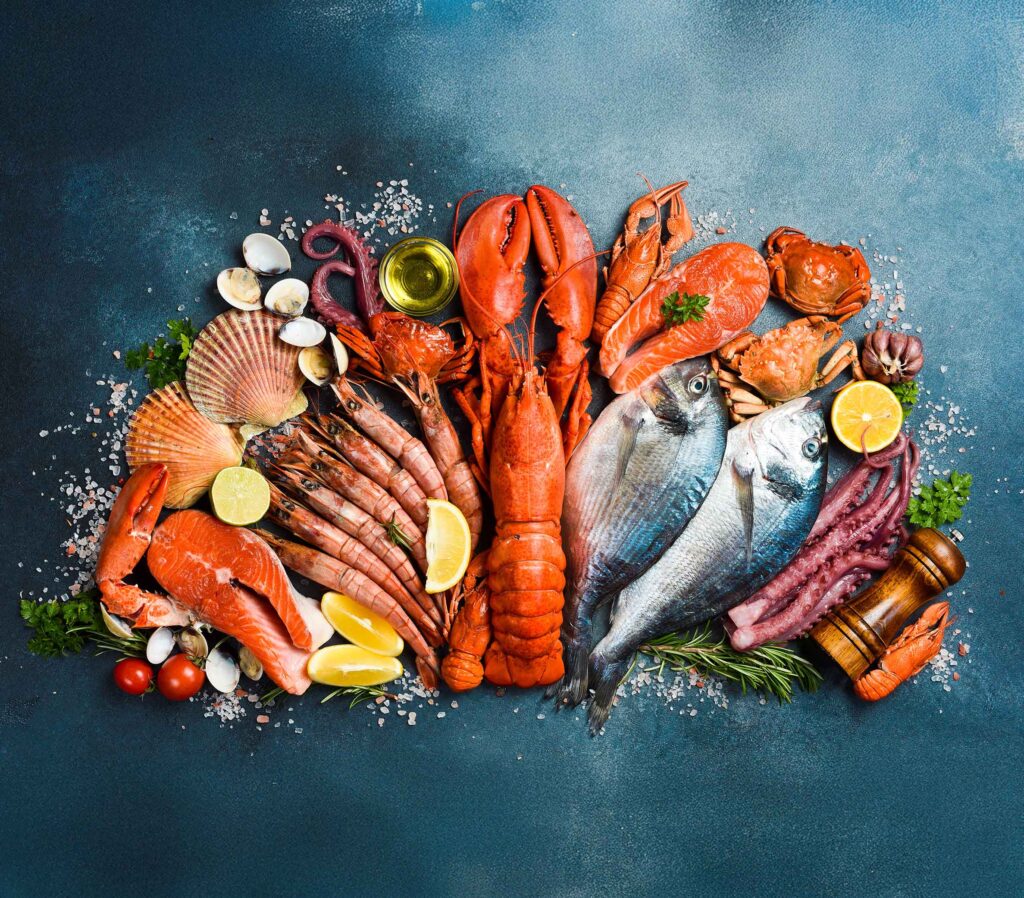
Frozen shrimp remains the dominant product, followed by frozen fish, squid, dried items, frozen cuttlefish, surimi-based products, and live and chilled seafood. The composition of the export basket, however, has been gradually shifting. The share of value-added products has increased from 2.5 per cent to 11 per cent of total seafood exports, reaching a value of approximately 742 million dollars. This shift is significant because value-added products generate higher margins and are less exposed to commodity price volatility than raw or minimally processed exports.
Regulatory Compliance: The US Market and Marine Mammal Rules
Maintaining access to the United States — which accounts for over a third of India’s seafood export value — has required navigating a specific regulatory challenge. The US Marine Mammal Protection Act mandates that seafood exporters demonstrate measures to reduce marine mammal by-catch at levels comparable to US domestic requirements. Failure to meet this standard can result in an import ban on affected products.
India secured a comparability finding from US authorities in 2025, following a process involving scientific stock assessments and stakeholder consultations. The finding ensures that Indian seafood exports can continue to access the American market beyond the December 2025 compliance deadline. This outcome was not automatic — it required sustained engagement and documented compliance measures — and its significance lies in protecting the largest single destination for India’s seafood exports.
A parallel compliance effort involves the installation of Turtle Excluder Devices on shrimp trawlers. Wild-caught shrimp exports face restrictions unless vessels are equipped with these devices, which allow sea turtles to escape from trawl nets. Large-scale deployment of TEDs is described as progressing across coastal states, though the government’s statement characterises this as an ongoing process rather than a completed one.
Digital Infrastructure and Traceability
India has launched a national digital framework for end-to-end traceability of seafood products, covering tracking from harvest through processing and export, alongside food safety certification and compliance documentation. This infrastructure is intended to support access to markets with stringent import requirements — particularly the EU and the US — where traceability and certification are conditions of entry rather than optional.
The Sanitary Import Permit system, which governs imports of aquatic species and products into India, has been fully digitised and integrated with the National Single Window System. Processing time for these permits has been reduced from 30 days to 72 hours. Waivers have been introduced for specific categories including SPF shrimp broodstock, fish oil, limited research and development samples, and wild-caught fish imported solely for value addition and re-export.
These administrative reforms address the cost of compliance at the import end of the value chain — where delays in obtaining permits for broodstock or inputs can affect production cycles for aquaculture operations.
Also Read:
Diversification: Beyond Shrimp
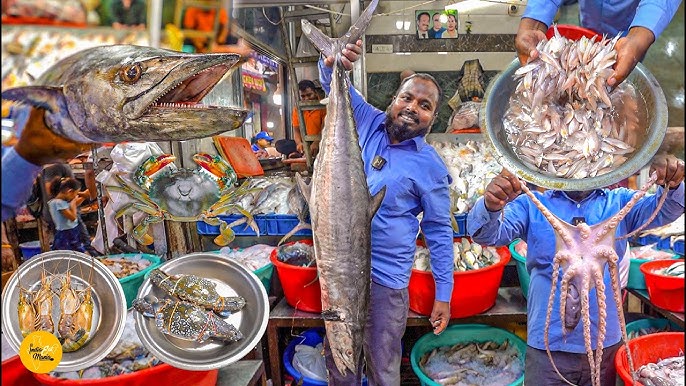
The government has identified over-dependence on shrimp as a structural vulnerability in India’s seafood export profile. A single commodity accounting for the majority of export value creates exposure to price fluctuations, disease outbreaks, and changes in demand or regulations in key markets. The policy response has been to promote diversification both in species and in product form.
Under PMMSY, the government is supporting the expansion of brackish-water aquaculture and the development of export-oriented high-value species. The target species list includes tuna, seabass, cobia, pompano, mud crab, GIFT tilapia, grouper, tiger shrimp, scampi, and seaweed. Each of these represents a market segment where India currently has limited or nascent presence but where demand exists in premium international markets.
The diversification strategy is complemented by investment in post-harvest infrastructure — cold-chain networks, modern fishing harbours, and fish landing centres — which are prerequisites for maintaining product quality across longer supply chains and accessing markets that require consistent cold-chain management from catch to delivery.
The Five-Year Outlook
The government has outlined a forward strategy focused on three shifts: moving toward higher-value export products, expanding geographic market reach, and strengthening quality assurance systems. The targeted markets for expansion include the United Kingdom, European Union, ASEAN, and West Asia. Inland export hubs and freshwater supply chains are identified as areas requiring investment to develop India’s capacity in freshwater species exports, which remain underdeveloped relative to marine products.
The share of value-added products in the export basket is targeted to increase further, driven by expanded processing capacity, workforce development, and improved certification infrastructure. Enhanced digital traceability and compliance frameworks are described as the underpinning for India’s ambition to position itself as a premium and dependable seafood exporter in global markets.
These are stated policy objectives and investment directions rather than committed allocations with defined timelines. The trajectory of seafood export growth over the past decade provides a documented basis for the direction of travel, but the pace and scale of future growth will depend on execution of the infrastructure and regulatory investments outlined, as well as on global market conditions and the competitive positioning of other major exporters.
What the data establishes clearly is that the transformation of India’s fisheries sector — from a traditional, domestically focused industry to a globally competitive export sector — is already substantially underway. The decade between 2013-14 and 2024-25 produced a doubling of export value, a near-40 per cent increase in fish production, and a measurable shift toward higher-value products. The question for the next phase is whether the institutional and infrastructural investments now being made can sustain and deepen that trajectory.
This article is based on data and policy information provided by the Department of Fisheries, Government of India, including production figures, export statistics, and programme details under the Pradhan Mantri Matsya Sampada Yojana. Forward-looking targets and projections have been clearly identified as such.