


New Delhi — Apple has launched its latest Studio XDR Display and MacBook Pro lineup — powered by the M5 Pro and M5 Max chips — in India, with a combined workstation configuration priced at approximately ₹8 lakhs. The update introduces Mini-LED panel technology to the Studio XDR Display for the first time, alongside a 120Hz refresh rate and 2,000 nits of peak HDR brightness, while the MacBook Pro M5 series claims a fourfold improvement in artificial intelligence and machine learning performance over its predecessor.
The products are positioned squarely at professional creative and technical users — video editors, colourists, VFX artists, and AI developers running large language models locally. For general consumers, the price point places both products well outside everyday consideration.
Studio XDR Display: The Panel Upgrade That Professionals Have Waited For
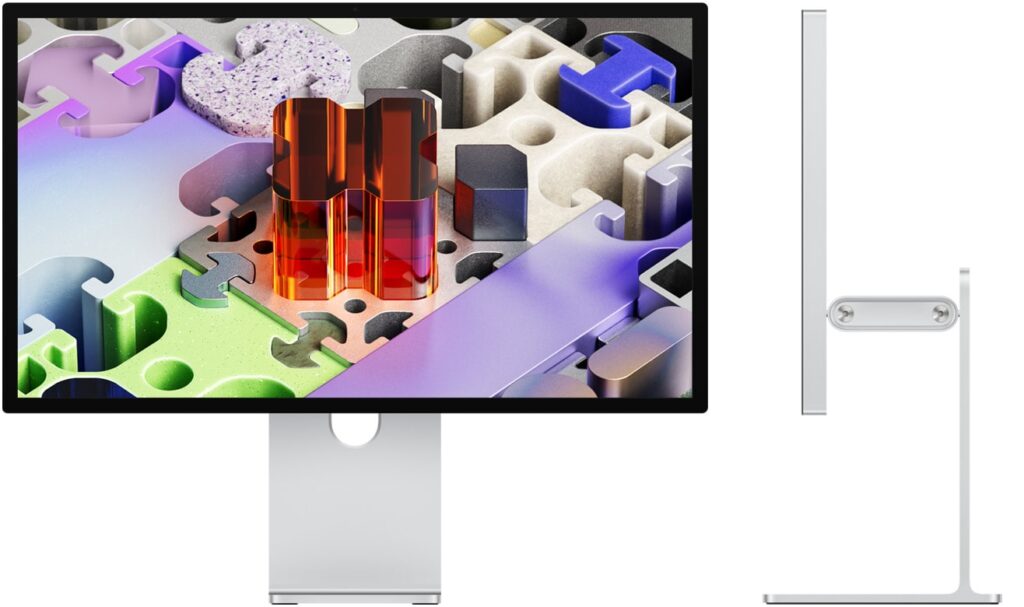
The most consequential change in the new Studio XDR Display is the transition from standard LED to Mini-LED backlighting technology. On paper, the specification shift — to a 27-inch, 5K resolution panel with 2,000 nits peak HDR brightness — represents a significant jump from the previous generation’s 500 to 600 nits ceiling. In practice, the difference is most visible in black levels.
Mini-LED backlighting allows for far more precise local dimming compared to standard LED arrays. Where the previous Studio XDR Display produced deep greys in dark scenes, the new panel produces what professional colourists describe as true blacks — a distinction that is immediately visible in direct comparison but may be imperceptible to non-specialist users in ordinary use conditions.
The display is priced at approximately ₹4 lakhs. A Nano Texture glass variant, which reduces surface reflections to near zero, is available for an additional ₹40,000.
The 120Hz ProMotion refresh rate is new to this generation. Previous Studio XDR and Studio Display models were limited to 60Hz — a limitation that distinguished them unfavourably from Apple’s own Pro Display XDR in professional workflows involving motion. The upgrade brings the display in line with the refresh rate on current MacBook Pro screens.
Also Read:
Audio and Connectivity
Apple has increased the chassis depth of the Studio XDR Display to accommodate a six-speaker system — two woofers and four tweeters — that has drawn comparisons, in independent hands-on assessments, to standalone soundbar performance in the ₹15,000 to ₹25,000 range. The audio system is notable given that monitor speakers at this price tier are not always a priority for display manufacturers.
On connectivity, the display ships with four Thunderbolt ports. Two support Thunderbolt 5 at 120 gigabits per second — currently the fastest consumer-grade wired interface available — while the remaining two operate at 10 gigabits per second and provide 140 watts of power output. The 140-watt output enables daisy chaining, allowing up to three additional external displays to be connected in sequence from a single Studio XDR unit.
The display also houses Apple’s A19 Pro chip — the same silicon that powers the iPhone 17 Pro — enabling Center Stage, Apple’s automatic subject-tracking feature for video calls, to function natively within the monitor.
Height Adjustment: A Functional Upgrade
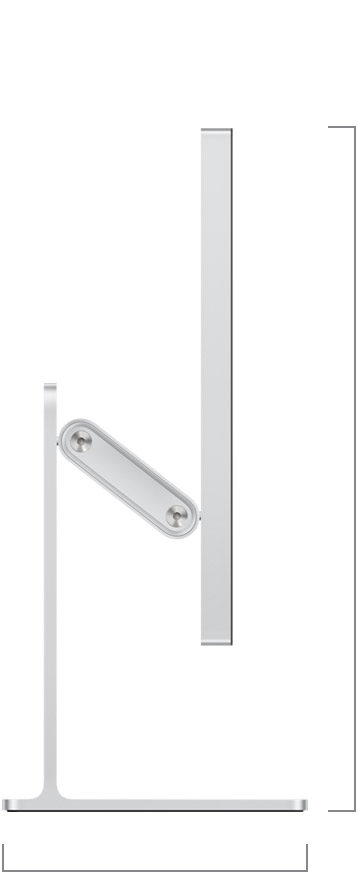
Previous versions of the Studio Display permitted only tilt adjustment. The new Studio XDR Display adds 110 millimetres of vertical height adjustment — a practical addition for users pairing it with a MacBook Pro, where screen alignment between laptop and external display has previously been a minor ergonomic friction point.
MacBook Pro M5: AI Performance as the Primary Differentiator
The MacBook Pro M5 series — available in 14-inch and 16-inch configurations — maintains the same external chassis as the M3 and M4 generations. The performance gains in this cycle are concentrated in AI and machine learning workloads, where Apple claims a fourfold improvement over M3-generation models.
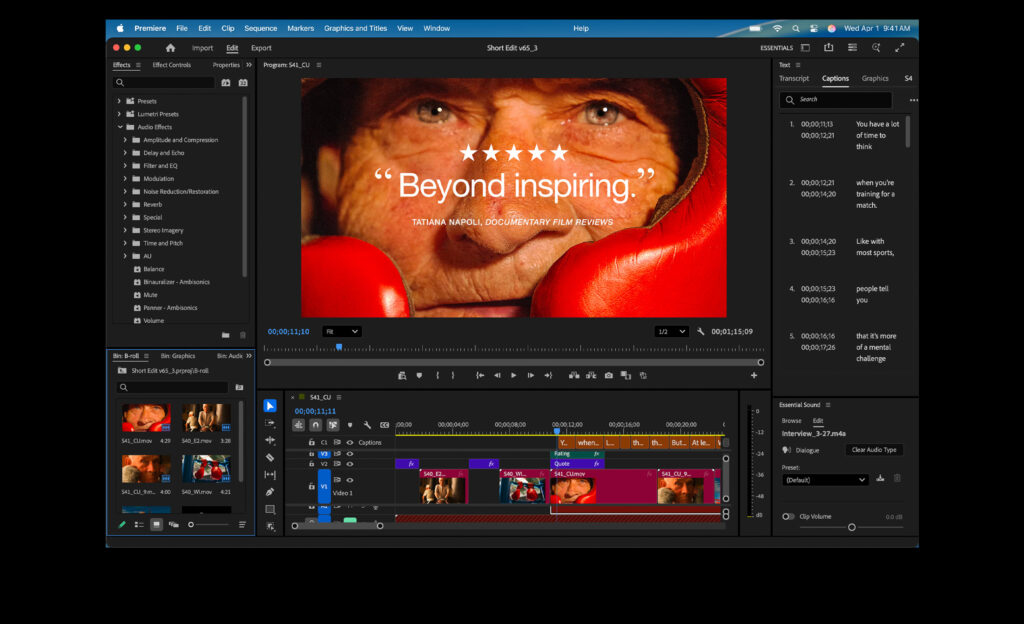
General performance improvements are more modest, with Apple indicating a 15 to 20 percent uplift in CPU and GPU tasks compared to the previous generation — a figure consistent with generational chip improvements across the industry but unlikely to justify an upgrade from M4 alone.
The M5 Max variant is architecturally equivalent to two M5 Pro chips combined, delivering the highest memory bandwidth and neural engine throughput in the lineup.
Memory, Storage, and Pricing
The M5 Pro starts with 24 gigabytes of unified memory, with configurations extending to 48 and 64 gigabytes. The M5 Max tops out at 128 gigabytes — a specification relevant primarily to users running large language models locally, where unified memory functions as the primary constraint on model size. The storage tier now begins at one terabyte; the 512-gigabyte option present in earlier generations has been discontinued.
On pricing, Apple has held the line more tightly than in previous generational transitions. The top-configured M5 Max is priced below ₹8 lakhs — marginally less than the equivalent M3 Max configuration at its launch, despite the performance improvements. This is a relatively uncommon outcome in professional computing hardware, where performance upgrades typically carry price premiums. MacBook Pro M5 Pro configurations begin at approximately ₹3.65 lakhs, with final pricing varying by memory and storage selection.
Also Read:
Who This Setup Is For — And Who It Is Not
Both products carry specifications that exceed the practical requirements of most users, and their pricing reflects that positioning. The combined workstation at approximately ₹8 lakhs is not a consumer or prosumer proposition. It is a professional infrastructure investment.
The Studio XDR Display is most relevant to colour-critical workflows — video editing, DI grading, VFX compositing, and film production — where the difference between true black and near-black has downstream consequences in the final delivered image. Professional colourists who have used the display in hands-on assessments have noted its impact on grading precision. That assessment requires professional context to validate; casual users comparing the display to consumer monitors at a fraction of the price will not encounter the same limitations in their work.
The MacBook Pro M5, specifically in the M5 Max configuration with 64 or 128 gigabytes of unified memory, is the most capable Apple silicon available for local AI inference at the time of this report. Running large language models locally — as opposed to relying on cloud-based inference through services such as OpenAI or Google — requires substantial unified memory and sustained neural engine performance. The M5 Max addresses both requirements more cost-effectively than comparable workstation hardware from other manufacturers, though direct benchmark comparisons with competing platforms have not been independently reviewed at the time of writing.
Market Context and Limitations
Apple’s professional hardware line-up in India has historically faced adoption barriers not only from price but from the absence of authorised professional service infrastructure in many cities, and from the limited availability of high-end configurations for immediate retail purchase without extended lead times.
The Studio XDR Display, at ₹4 lakhs, also competes — at least nominally — with dedicated reference monitors from manufacturers such as Sony, Eizo, and Flanders Scientific, which are used in professional broadcast and cinema grading environments. How the Studio XDR performs against those displays in calibrated, controlled grading environments is a question that the product launch materials do not address and that independent professional evaluation will need to establish.
For AI developers and researchers running local inference workloads, the M5 Max’s 128-gigabyte unified memory configuration is a meaningful capability at its price point. The caveat is that AI model requirements are evolving rapidly, and configurations that are sufficient for current model sizes may require reassessment as frontier models increase in parameter count.
Conclusion
The Apple Studio XDR Display and MacBook Pro M5 represent substantive technical upgrades over their predecessors — particularly in panel technology, refresh rate, brightness, and AI processing performance. For professional colourists, filmmakers, and AI developers who work within Apple’s ecosystem, the combined workstation at approximately ₹8 lakhs offers a coherent and capable professional environment.
For everyone else, the price ensures these products remain firmly in the category of specialised tools rather than aspirational consumer hardware. Whether the investment is justified depends entirely on the workflow — a determination that, as the reviewer correctly notes, professionals in these fields are well-positioned to make for themselves.
Apple India pricing for the Studio XDR Display and MacBook Pro M5 series is as indicated at time of publication. Configuration-specific pricing may vary. Buyers are advised to verify current pricing and availability through authorised Apple retail channels.