



India — JioHotstar’s new Hindi original Chiraiya, which began streaming on March 20, 2026, has emerged as one of the most discussed OTT releases of the season — not primarily because of its production scale, but because of the subject it refuses to avoid. The six-episode drama, directed by Shashant Shah and produced by SVF Entertainment, centres on marital rape within a traditional Indian joint family. Its promotional slogan, #ShaadiLicenseNahiHai (“marriage is not a licence”), signals its position plainly.
Within days of its release, the series had reached No. 4 in Hindi Today on JioHotstar. Its reception has been mixed among professional critics — but notably warmer among general viewers on social media.
What the Show Is, and What It Is About
Chiraiya — the word translates to “bird,” and functions as a metaphor for a female spirit caged by social expectation — is adapted from the Bengali web series Sampurna. The series is set in Lucknow and built around a traditional joint family presided over by the scholarly patriarch Papaji, played by Sanjay Mishra.
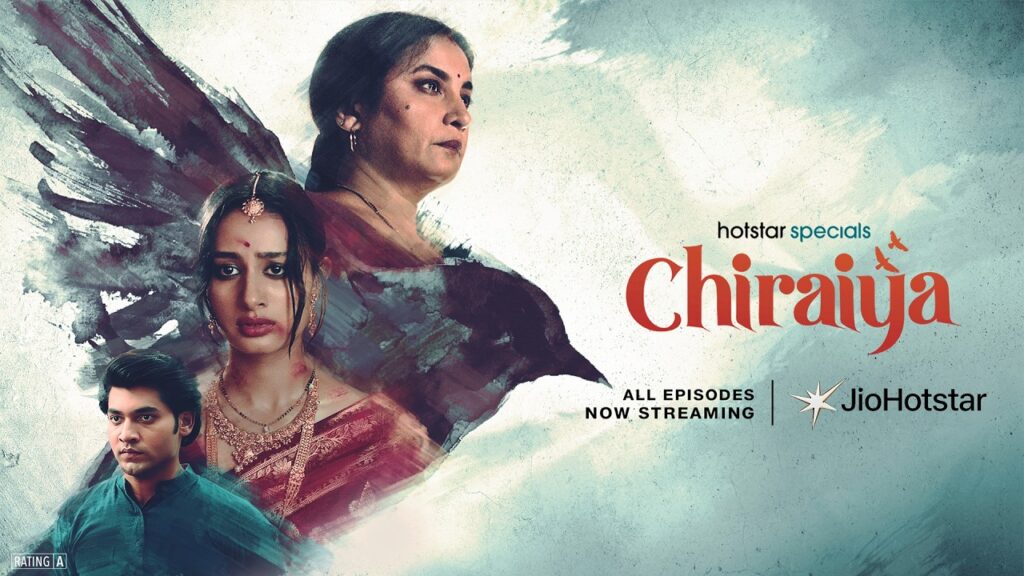
At the centre is Kamlesh, played by Divya Dutta — a devoted daughter-in-law who holds absolute faith in her family and its value system. Her life is upended when the family arranges a marriage for her devar Arun, and the illusion of domestic normalcy shatters on the very first night, when Arun forces himself on his new bride Pooja. What follows is not a conventional revenge narrative. It is a reckoning with an entire system — family structures, inherited silence, and generations of conditioning that teach women to adjust rather than resist.
The show is rated A (Adults Only) and streams in Hindi, with dubbed versions available in Tamil, Telugu, Marathi, and Malayalam.
Six Episodes, One Unbroken Argument
All six episodes — Griha Pravesh, Pag Phera, Honeymoon, Muh Dikhai, Vidaai, and Kathaa — were released simultaneously on March 20, 2026, each written by Divy Nidhi Sharma and directed by Shashant Shah. The episode titles themselves chart a traditional wedding arc — entry into the marital home, the first return to the natal home, the honeymoon — before subverting the familiarity of those rituals entirely.
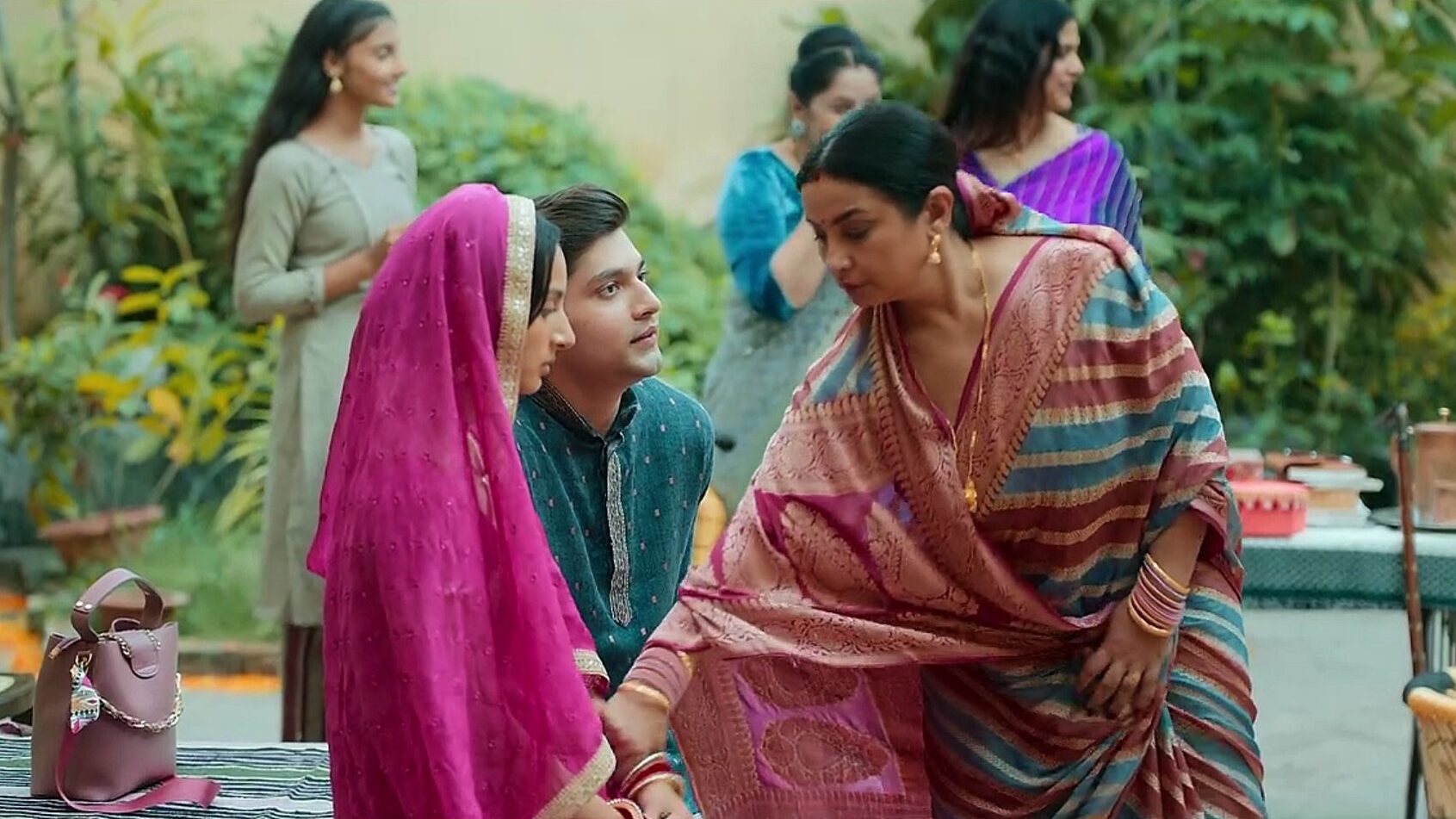
The narrative does not begin with confrontation. The series opens with a wedding — comforting, predictable, almost warm — then lulls the viewer into a sense of familiarity before quietly shifting tone, without dramatic announcement. By Episode 3, Honeymoon, Kamlesh is forced to confront what she has been trained not to name. By Episode 5, Vidaai, the show delivers one of its most structurally significant disclosures: when Kamlesh takes Pooja to the family patriarch to seek intervention, they learn there is no legal recourse for marital rape in India. A slate at the end of the series cites statistics from the 2019–21 National Family Health Survey on domestic and sexual violence, noting that in the absence of clear laws against marital rape, the burden of change “falls on families and communities.”
Performances: Broadly Praised, Occasionally Qualified
Divya Dutta’s performance as Kamlesh has drawn consistent attention across critical responses, regardless of how reviewers assessed the writing. Scroll.in described her as “solid throughout, doing the heavy lifting even when the writing and direction is wanting.” One reviewer called it a career-defining performance — noting that Dutta navigates a character defined by internalised tradition and slow, painful unlearning.
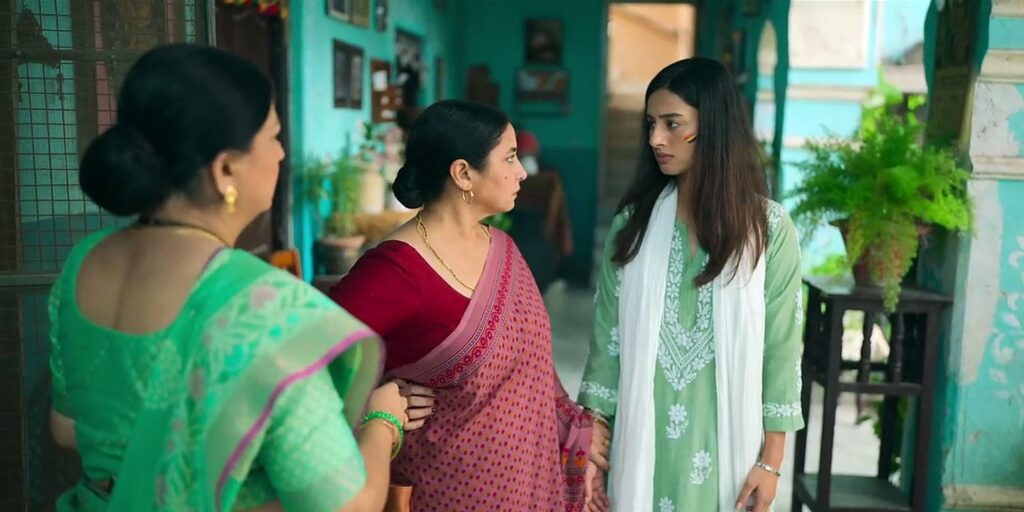
Dutta is “unafraid to let Kamlesh come across as frustrating, even ‘dumb’ at times, because that blindness is the point of the character.” That quality — the portrayal of complicity as a learned, not innate, condition — has been widely noted as the show’s most compelling character choice.
Sanjay Mishra’s portrayal of Papaji drew praise for its “quiet authority,” with reviewers noting how his character — educated, outwardly progressive — adds significant texture to the show’s central argument. His character highlights a crucial point: education does not always lead to empathy, and awareness is not just about what you know, but what you are willing to accept.
Siddharth Shaw was described as a revelation as the antagonist Arun — compelling, toxic, and disturbingly believable in his entitlement. Prasanna Bisht as Pooja and Faisal Rashid as Vinay — Kamlesh’s husband, a “good man” who nonetheless remains silent — round out an ensemble that critics largely agreed was well-cast, even when they disagreed about the writing.
Where Critics Diverged
The series received broadly mixed reviews from professional critics, with most awarding it three to 3.5 stars out of five.
The Times of India gave the show 3.5 stars, with Archika Khurana noting that it “tackles the sensitive and rarely explored subject of marital rape, challenging the deeply ingrained belief that marriage implies automatic consent.” Firstpost also gave 3.5 stars, with Vinamra Mathur writing that the wedding room — conventionally depicted as a site of intimacy — is here rendered as “a room for horror and loneliness.”
Also Read:
India Today’s Sana Farzeen, also awarding 3.5 stars, wrote that the series “does not claim to have all the answers — instead, it leaves you with questions: difficult, uncomfortable, necessary ones.”
The more critical responses found the execution uneven. The publication argued that Chiraiya makes the mistake of presenting a female saviour as a gendered version of the male saviour, with Pooja’s trauma existing primarily to enable Kamlesh’s transformation. The review also criticised the characterisation of Pooja as an implausibly online, urban Gen-Z figure dropped into a conservative joint family setting — a framing it described as contrived.
Scroll.in’s assessment was that Chiraiya begins as a character-driven drama before turning “more heavy-handed and less satisfying” in its later episodes.
The Audience Response
Where critics were divided, general viewers were considerably more uniform in their response. Since its release, the series has generated sustained conversation on social media, with viewers praising the series for refusing to look away from uncomfortable truths. Posts on X ranged from personal testimonies to calls for stronger legislation on marital rape, with multiple users describing the series as a “wake-up call” — directed both at society and at the legal system.
One viewer wrote: “This is not merely a battle for women; it is a matter of human dignity.” Another noted that the show “might prove to be quite unsettling for men” — a reaction the makers appear to have anticipated and, arguably, intended.
Why the Subject Matters Beyond the Screen
Marital rape is not a criminal offence in India under current law. Exception 2 to Section 375 of the Indian Penal Code — retained in the Bharatiya Nyaya Sanhita — exempts sexual intercourse by a man with his own wife from the definition of rape, provided the wife is not under 18. Multiple petitions challenging this exception have been filed in Indian courts, including before the Supreme Court, but no definitive legislative change had been enacted as of this writing.
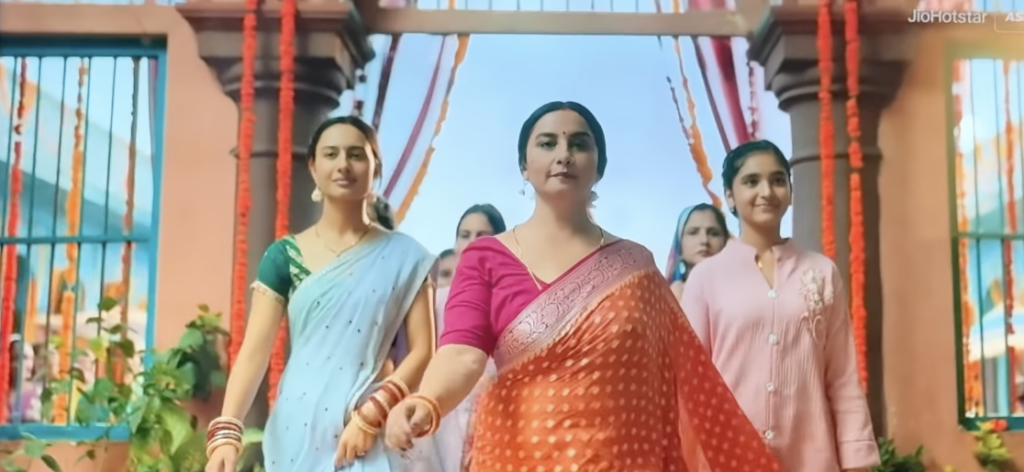
Chiraiya does not resolve this gap. It dramatises it — and, in Episode 5, names it directly on screen. The series closes with the message “Bolna Bandh, Sochna Shuru” — a line that translates roughly to “Stop Talking, Start Thinking” — which reviewers noted lingers long after the final episode ends.
Whether the series succeeds fully as storytelling is a question critics have answered differently. That the conversation it is trying to start is one Indian streaming has largely avoided until now is not in dispute.