


New Delhi — In the months following one of Indian digital media’s most severe creator controversies, stand-up comedian Samay Raina did not retreat from public life, issue a comprehensive apology, or signal a fundamental shift in creative direction. He went on an international tour that sold out, confirmed a second season of the show at the centre of the storm, and described that season as more unfiltered than its predecessor.
The arc from crisis to continuation is the subject of the final section of Raina’s public account, Still Alive — a video in which he traced not only the events of the India’s Got Latent controversy but the personal and philosophical framework that allowed him to navigate it without, in his own assessment, being defined or ended by it.
What emerges from that account is a portrait of a creator whose response to cancellation was shaped less by conventional crisis management than by a specific inherited philosophy — one rooted in family history, cultural identity, and a clear-eyed distinction between survival and martyrdom.
The Father and the Lesson
The emotional centre of Raina’s account of his recovery is not a legal development or a platform decision. It is a conversation with his father.
Raina’s father is, by his son’s description, a former journalist — a detail that carries its own resonance given the nature of the controversy Samay was navigating. More significantly, he is a Kashmiri Pandit who lived through and survived the mass exodus of that community from the Kashmir Valley beginning in 1990 — one of the most traumatic displacement events in post-independence Indian history, in which hundreds of thousands of Kashmiri Pandits were forced to leave their homes under conditions of violence and fear.
The lesson his father offered during the crisis, as Raina recounted it, was precise and unambiguous: the show exists because of you; you do not exist because of the show.
The distinction is not merely rhetorical. It is a reordering of priorities that separates identity from output — the person from the product. For a creator whose professional identity had become almost entirely fused with India’s Got Latent, this was a significant cognitive intervention. The show, in this framework, is a consequence of the person’s existence and capabilities. Its deletion, its legal jeopardy, its reputational damage — none of these touch the underlying person from whom the show derived.
This is, notably, the kind of perspective that is difficult to arrive at through professional crisis management or media training. It comes from somewhere older and harder-won.
Survival as Philosophy: The Kashmiri Pandit Framework
Raina made explicit in his account what might otherwise remain implicit: the philosophy of survival he drew on during the controversy was not invented in response to it. It was inherited from a community that had been required to practise it under conditions of genuine existential threat.
His framing of survival versus martyrdom is direct. The martyr narrative — the idea that the morally superior response to persecution is to stand firm, refuse to bend, and absorb the consequences as a form of public witness — is, in his telling, a less sophisticated position than the one his community learned through necessity. Surviving, continuing, refusing to be ended — this is, in his framework, the more demanding and ultimately more meaningful form of resistance.
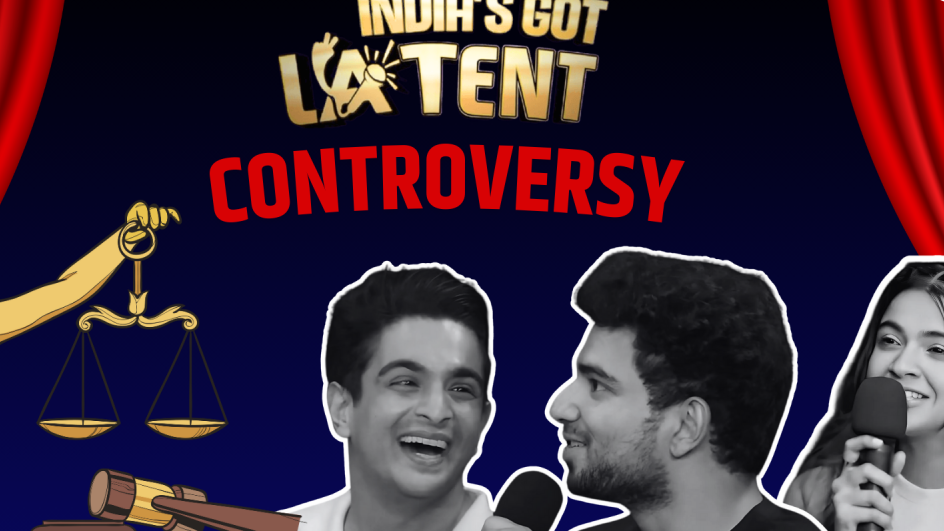
He drew a parallel between his own navigation of the FIRs, the show’s deletion, and the financial crisis, and his family’s navigation of displacement from Kashmir. The parallel is not equivalence — a YouTube controversy and a forced exodus are not comparable in scale or human cost. The point is structural: the same philosophical toolkit applies. You do not give the thing that is trying to end you the satisfaction of ending you. You outlast it.
This framework has implications beyond the personal. It represents a specific cultural inheritance being applied to a contemporary media crisis — and it raises questions about how different backgrounds and histories shape the way public figures respond to public pressure.
Also Read:
The Luck Factor: Kunal Kamra and the Shifting Spotlight
Raina’s account of his return to India includes a development he acknowledged openly: the controversy that had consumed national attention did not fade purely because of anything he did. It faded, in significant part, because something else arrived to replace it.
In the period around Raina’s return to India, fellow comedian Kunal Kamra became the subject of a separate and significant public controversy — one that redirected media attention and social media energy toward a different target. Raina described this shift in the media spotlight as consequential to his own situation, and he was candid about its fortuitous timing.
The acknowledgment is notable for its honesty. In conventional crisis narratives, recovery is typically attributed to strategy, apology, or the passage of time. Raina’s account adds a fourth element: chance. The attention economy that had turned against him moved on, not because it was satisfied or persuaded, but because something else demanded its focus.
This is structurally accurate to how media cycles function, particularly in the digital environment where controversy is abundant and attention is finite. The observation does not diminish whatever genuine steps Raina took toward managing the situation — it simply adds an honest accounting of the role of timing and luck in determining who gets to recover and when.
The International Tour: A Different Kind of Verdict
While the legal proceedings in Maharashtra, Rajasthan, and Assam remained ongoing, Raina’s standing with his direct audience — the people who had chosen to follow his work — was measured through a different mechanism: ticket sales.
His international tour sold out. The specific markets, venues, and ticket volumes have not been independently detailed in available public reporting, and those figures are not reproduced here beyond what Raina himself described in Still Alive. But the fact of a sold-out international run — occurring in the direct aftermath of the controversy, the FIRs, and the deletion of the show — is itself a data point about audience loyalty in the creator economy.
It suggests that the audience for Raina’s work did not, in aggregate, conclude that the controversy warranted withdrawal of support. Whether this reflects considered judgement, continued loyalty to a familiar personality, or the dynamics of parasocial attachment that characterise creator-audience relationships is a question the data point alone cannot answer. What it confirms is that Raina’s commercial standing survived the crisis — at least with his existing audience base.
Season 2: Defiance as Creative Direction
The conclusion Raina drew from the entire experience — the financial exposure, the legal jeopardy, the anxiety, the family counsel, the lucky timing, the sold-out tour — was not moderation. It was the opposite.
He confirmed in Still Alive that India’s Got Latent Season 2 would proceed, and characterised it as wilder and more unfiltered than its predecessor. He framed this not as provocation for its own sake but as a deliberate move away from seeking mass validation — a recalibration of who the show is made for and what it is trying to achieve.
This creative conclusion carries real risk, and it would be editorially irresponsible not to note it. The legal proceedings from the first season have not concluded. The regulatory and social environment for edgy digital content in India has not become more permissive as a result of the controversy — if anything, the India’s Got Latent case has demonstrated to other creators, platforms, and potential complainants alike that the mechanisms for escalating grievances about digital content are accessible and consequential.
A second season positioned as more unfiltered than the first will face scrutiny that the first season did not — because the first season established what the consequences of crossing certain lines can be. Whether Raina’s creative direction represents genuine artistic conviction, calculated audience positioning, or an underestimation of sustained legal risk is a question that only the second season’s content and reception will resolve.
The Uncancellable Creator: A Category Worth Examining
The framing of Raina as an “uncancellable creator” — a figure who absorbed one of Indian digital media’s most severe public storms and emerged with his career intact and his ambitions expanded — deserves some analytical caution.
He was not uncancellable in the sense of being immune to consequences. The show was deleted. Legal proceedings were initiated and remain unresolved. Financial damage, by his own account, was significant. Peers faced collateral reputational harm. The controversy produced real costs across multiple dimensions.
What Raina demonstrated was something different and perhaps more instructive: that in the creator economy, the relationship between a creator and their core audience can prove more durable than the relationship between that creator and the broader public discourse. The national conversation turned against him. His ticketed audience did not.
This distinction — between public narrative and direct audience loyalty — may be one of the more significant structural insights to emerge from the India’s Got Latent controversy. It suggests that cancellation, as a mechanism of consequence in the digital era, operates differently for creators with established direct relationships with their audiences than for public figures whose standing depends on institutional validation.
Whether that distinction holds in the face of ongoing legal proceedings, and whether Season 2 reopens questions that Season 1 left unresolved, remains to be seen.