

New Delhi, — The Gujarat Cooperative Milk Marketing Federation Ltd (GCMMF), which markets dairy products under the Amul brand, announced on Sunday that the Amul brand has crossed ₹1 lakh crore (₹1 trillion) in total turnover for the financial year 2025–26, registering an 11 per cent increase over the previous year’s base of ₹90,000 crore.
The milestone, disclosed by GCMMF in an official release, marks a significant point in Indian dairy history — the first time a homegrown cooperative brand has breached the ₹1 lakh crore turnover threshold. Separately, GCMMF’s own sales turnover stood at ₹73,450 crore for FY26, reflecting an 11.4 per cent rise over the ₹65,911 crore recorded in FY25.
A Cooperative Model at Industrial Scale
GCMMF, headquartered in Anand, Gujarat, functions as the apex marketing body for 18 member district cooperatives, collectively owned by approximately 3.6 million dairy farmers spread across more than 18,600 villages. The federation collects 31 million litres of milk daily and distributes over 24 billion product packs annually across more than 50 countries — a distribution scale few food organisations anywhere in the world can match.
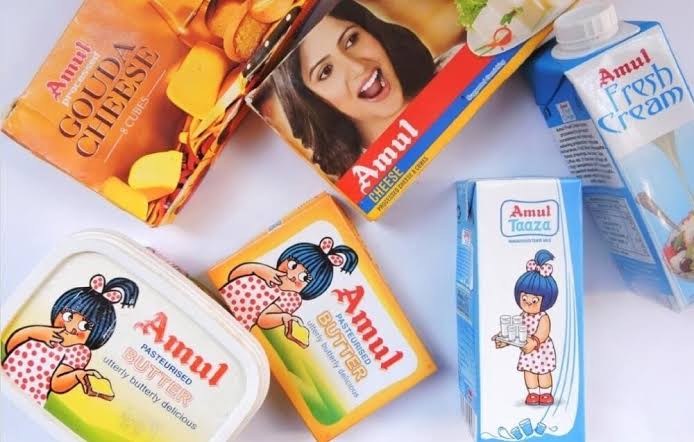
The brand’s product portfolio spans more than 1,200 stock-keeping units, encompassing liquid milk, butter, cheese, ghee, ice cream, paneer, and a growing range of value-added dairy products. According to GCMMF’s release, the federation’s growth in FY26 was driven by sustained domestic demand for liquid milk and value-added categories, combined with deliberate efforts to deepen its international footprint, including the introduction of fresh milk in European and United States markets.
The International Cooperative Alliance (ICA) has ranked Amul the world’s number one cooperative — an institutional recognition that GCMMF cited in its announcement.
Leadership Statements on the Milestone
GCMMF Chairman Ashok Chaudhary attributed the achievement to consumer trust and farmer contribution. “Crossing the ₹1 lakh crore brand turnover is a testament to the trust of millions of consumers and the tireless hard work of our 36 lakh dairy farmers,” he said in the official release.
Vice Chairman Gordhan Dhameliya framed the milestone within the broader cooperative philosophy. “Our journey to the ₹1 lakh crore milestone is a definitive victory for the cooperative spirit. By scaling our model nationally, we are proving that the Amul Model is a timeless blueprint for economic democracy,” he said.
Managing Director Jayen Mehta emphasised the federation’s global ambitions and its farmer-first mandate. “We are not just expanding our operations globally; we are expanding the very definition of what a farmer-owned institution can achieve in the modern world, ensuring that the fruits of technology and global trade reach the hands of the producers,” Mehta said.
Also Read:
What the Numbers Represent — and What They Do Not
A distinction critical to interpreting this announcement: the ₹1 lakh crore figure represents the consolidated Amul brand turnover — an aggregate that includes the sales of all 18 member district cooperative unions operating under the Amul brand identity, in addition to GCMMF’s own federation-level sales of ₹73,450 crore.
Brand turnover and federation turnover are separate metrics. GCMMF’s directly reported sales figure of ₹73,450 crore reflects the federation’s own commercial operations. The broader ₹1 lakh crore figure is a brand-level consolidation. Both numbers represent reported financial outcomes for FY26, not projections.
This distinction matters for investors, analysts, and policymakers seeking to assess the federation’s balance sheet independently of the broader cooperative ecosystem it anchors.
The Structural Engine Behind the Growth
Amul’s growth trajectory has not emerged from a single product category or a short-term demand spike. Analysts tracking India’s fast-moving consumer goods sector have noted that Amul’s model benefits from a structurally integrated supply chain — from farm collection to retail shelf — that provides cost insulation unavailable to investor-owned competitors.
The cooperative’s processing infrastructure spans 118 plants. Daily milk collection of 31 million litres feeds a chilling and pasteurisation network that supports both short-shelf-life liquid milk and long-shelf-life value-added products. This dual-channel capability has allowed Amul to serve both mass-market rural and premium urban consumer segments simultaneously.
Growth in value-added products — cheese, flavoured milk, protein-enriched dairy, and ready-to-drink formats — has become an increasingly important revenue driver as Indian consumers shift consumption patterns. GCMMF’s distribution network, which reaches over 50 countries, also provides a hedge against domestic demand fluctuations.
Global Expansion and the International Bet
The introduction of Amul fresh milk in European and United States markets represents a notable strategic move for a cooperative whose primary mandate has historically been domestic. International dairy markets are highly competitive and tightly regulated — shelf access, cold chain logistics, and local compliance norms present structural challenges distinct from India’s domestic environment.
GCMMF has not disclosed specific revenue figures attributable to international operations as a separate line item in this announcement. Whether global markets contribute materially to the ₹1 lakh crore figure — or remain a small but symbolically significant component — cannot be determined from publicly available information at this stage.
What is documented is the federation’s stated intent: to extend the Amul model beyond India’s borders and to position farmer-owned institutions as credible participants in global food trade.
India’s Largest FMCG Organisation
With the FY26 results, GCMMF maintains its standing as India’s largest fast-moving consumer goods organisation by turnover — a position it holds ahead of multinational competitors including Hindustan Unilever and Nestlé India, as well as domestic peers in the food and beverage sector.
The cooperative’s farmer-ownership structure means that surpluses, once declared, flow back to producer-members rather than external shareholders. This structural feature has been central to Amul’s political and institutional durability across seven decades since its founding — and continues to distinguish it from both private dairy companies and state-owned enterprises.