


India — Realme has launched the Realme 16 5G in India, positioning it as a slim mid-range smartphone centred on battery capacity, display quality, and a rear-panel selfie mirror — a feature the company describes as the first of its kind in the Indian market. The device is priced starting at ₹31,999 for the 8GB RAM and 128GB storage variant, with an effective price of approximately ₹28,999 after applicable offers.
The launch places the Realme 16 5G in a competitive segment of the Indian smartphone market where differentiation increasingly depends on specific use-case strengths rather than headline specifications. Realme’s approach with this device emphasises battery life and design refinement over raw processing power.
Design and Build
The Realme 16 5G measures 8.1 millimetres in thickness and weighs 183 grams, placing it among the slimmer handsets in its battery category. The rear panel features a matte-finished polycarbonate construction with a textured pattern that Realme has branded the Glimming Wing Design. The camera module layout has drawn comparisons to older Apple smartphone designs in early reviews, though the visual similarity is one of general arrangement rather than a direct replication.
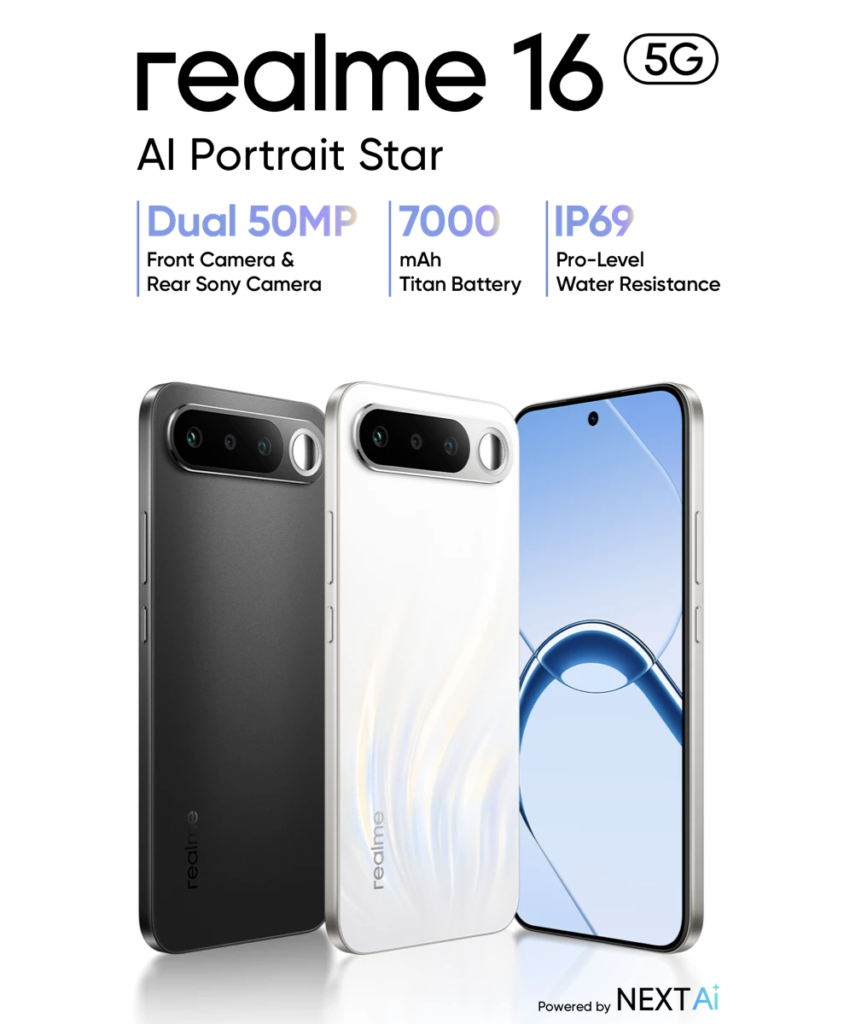
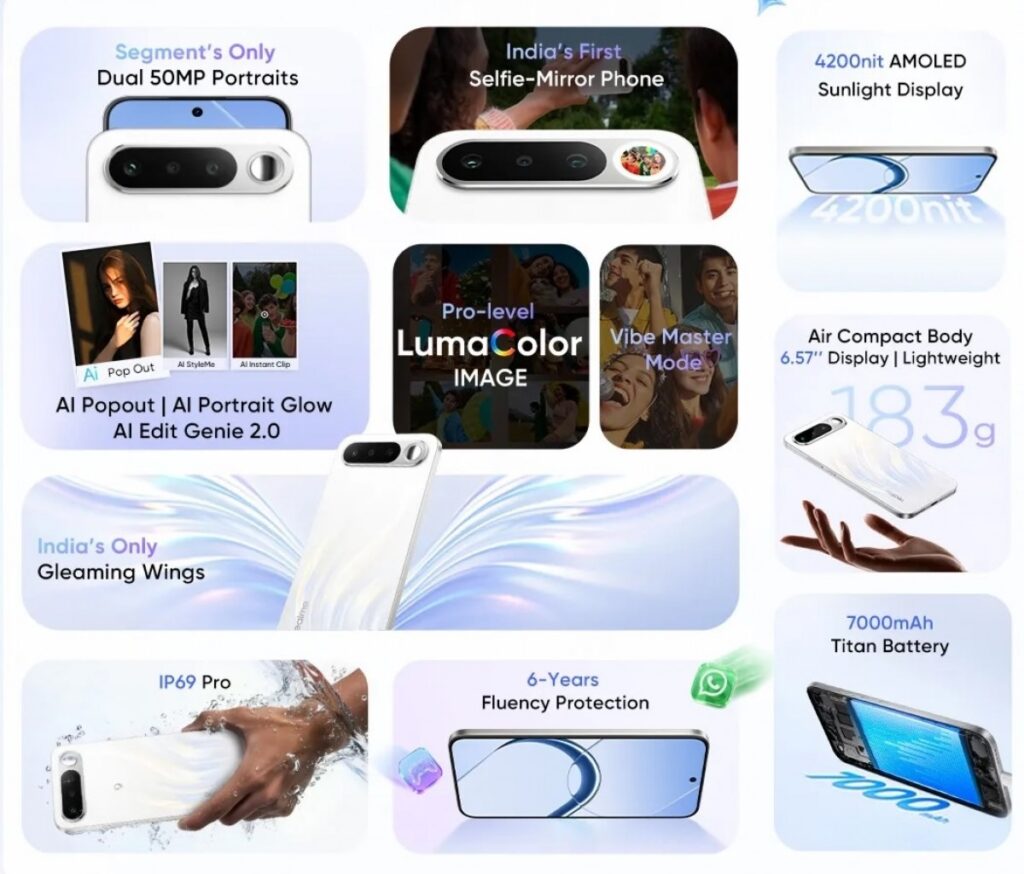
The device carries an IP69 rating, indicating protection against high-pressure water jets in addition to standard dust resistance. This is a notably high ingress protection rating for a mid-range device and positions the Realme 16 5G ahead of several competitors in its price range on this specific metric. IP69, it should be noted, covers resistance to high-temperature, high-pressure spray rather than sustained submersion — a distinction worth understanding for practical usage expectations.
Display
The smartphone features a 6.57-inch Full HD+ AMOLED panel with a 120Hz refresh rate and a 93 per cent screen-to-body ratio. The display supports a high brightness mode of 1,400 nits and a peak brightness of 4,200 nits, which should provide adequate visibility in direct sunlight — a relevant consideration for outdoor use in Indian conditions. The panel is protected by DT Star D+ glass.
AMOLED technology at this price point delivers the expected advantages of deep blacks, high contrast, and vibrant colour reproduction. The 120Hz refresh rate provides smooth scrolling and animation, a feature now standard across much of the mid-range segment.
Also Read:
The Selfie Mirror: India First Claim
The feature receiving the most attention in Realme’s launch positioning is the selfie mirror — a small physical mirror integrated into the rear panel of the device. Its purpose is to allow subjects to view themselves while a photo is being taken with the rear camera, enabling higher-quality self-portraits using the main sensor rather than the front-facing camera.
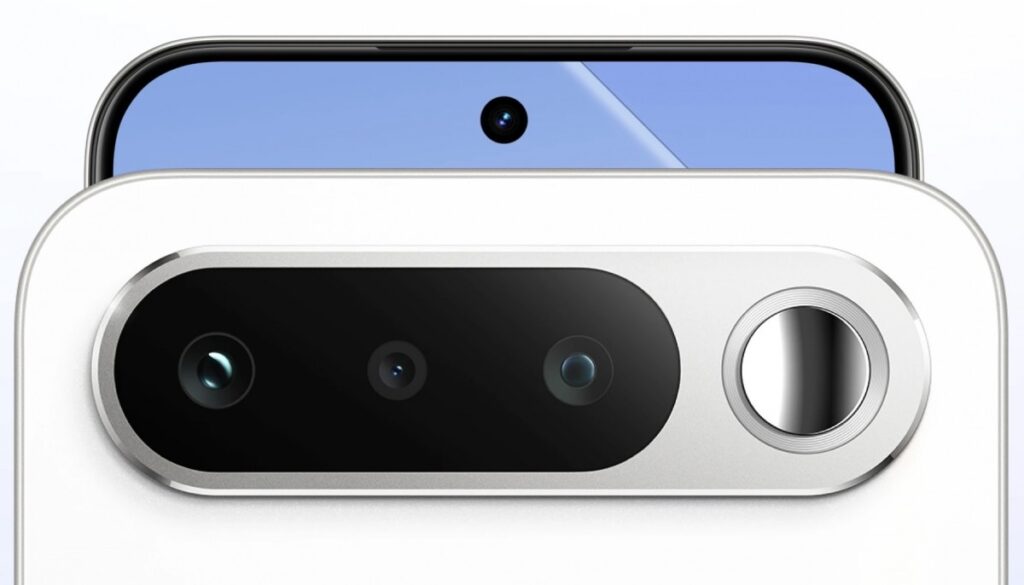
Realme has described this as India’s first such implementation. The practical value of the feature rests on the quality difference between the rear and front cameras — where the rear 50-megapixel Sony IMX852 sensor produces better image quality than front cameras typically achieve at this price point. The mirror makes that rear camera accessible for solo portrait use without requiring a secondary screen or a flip mechanism.
Whether users find this a meaningful addition or a novelty will depend on how frequently they use self-portrait photography and whether the quality improvement justifies the workflow of using the rear camera for selfies. It is a genuinely differentiated feature rather than a marketing label applied to a standard specification.
Camera System
The rear camera system consists of a 50-megapixel Sony IMX852 primary sensor in a dual-camera configuration. A front-facing 50-megapixel camera completes the setup. Based on available assessment, the main camera delivers accurate colour reproduction, natural skin tones, and solid image detail in good lighting. Performance in low light is not specifically addressed in the available source material and should be evaluated independently by prospective buyers.
Two limitations are worth noting clearly. First, there is no ultra-wide or telephoto lens. Users who require shooting flexibility — wide-angle landscapes or optical zoom for distant subjects — will find this a constraint. Second, video recording is capped at 1080p at 60 frames per second on both cameras. There is no 4K recording capability. For users who prioritise video quality, this is a meaningful specification gap relative to devices in overlapping price brackets that offer 4K recording.
Performance
The Realme 16 5G is powered by the MediaTek Dimensity 6400 processor, built on a 6-nanometre architecture. This is a mid-range chipset — capable for everyday tasks, multitasking, and casual gaming, but not positioned for demanding gaming titles at high settings or intensive workloads. Available benchmark data indicates stable performance with limited thermal throttling and reasonable efficiency under sustained load. Games such as BGMI can run at smooth and extreme settings at 60 frames per second, according to the source review.
The device ships with 8GB of LPDDR4X RAM and storage options up to 256GB using UFS 2.2 storage. These are standard mid-range memory specifications. The combination of a mid-tier processor with this memory configuration is suited to the device’s intended use case — everyday productivity, social media, streaming, and casual gaming — without being positioned for high-performance applications.
Battery: The Primary Differentiator
The 7,000mAh battery is the specification that most clearly defines the Realme 16 5G’s market positioning. At 8.1 millimetres thick, achieving this battery capacity represents a genuine engineering trade-off that Realme has prioritised over other compromises. Most smartphones with batteries of this size are noticeably thicker or heavier.
Charging is supported at 60W, which should bring a battery of this capacity to full charge in a reasonable timeframe, though the source material does not specify a precise charge time. For users whose primary pain point is running out of battery during extended days — a concern common in Indian usage patterns that involve long commutes, outdoor use, and limited access to charging points — the combination of capacity and relatively fast charging is a genuine strength.
Software
The device runs Realme UI 7.0 and is committed to three years of operating system updates and four years of security patches. These are acceptable but not class-leading software support commitments — some competitors at similar price points now offer longer update windows. The software includes Google Gemini integration, Circle to Search, and AI-assisted photo editing tools. These are features delivered through Google’s platform rather than Realme-exclusive implementations.
Connectivity Limitations
The Realme 16 5G supports 5G, dual-band Wi-Fi, and Bluetooth 5.2. Two connectivity omissions are worth noting: the device does not include NFC, which excludes tap-to-pay functionality, and uses a USB 2.0 port rather than USB 3.x, which limits wired data transfer speeds. Neither is unusual at this price point in the Indian market, but buyers who use contactless payments or require fast wired transfers should factor this in.
Pricing Assessment
At ₹31,999 before offers and approximately ₹28,999 with available discounts, the Realme 16 5G sits at the upper end of the upper-mid-range segment. The pricing reflects a broader market trend of rising component costs pushing handset prices upward across manufacturers, as the source material notes. Whether the combination of slim design, large battery, AMOLED display, and the selfie mirror feature justifies the price relative to alternatives will depend on individual buyer priorities. The device makes a clear case for battery-focused users and those who value design finish; it makes a weaker case for those prioritising camera versatility or video capability.