

New Delhi — In early 2025, a single episode of a YouTube comedy show triggered a chain of events that would result in multiple criminal complaints across three states, intervention from a sitting chief minister, the deletion of one of India’s most-watched digital entertainment properties, and a broader national debate about where the boundaries of online expression lie.
The show was India’s Got Latent, created and hosted by stand-up comedian Samay Raina. The episode featured Ranveer Allahbadia — widely known by his creator identity BeerBiceps — as a guest. What followed was one of the most consequential controversies in the history of Indian digital content.
The Show and Its Scale
India’s Got Latent had, by any commercially meaningful metric, become a significant digital property. According to publicly available creator disclosures and reporting at the time, the show was reaching approximately 40 million unique devices per month — a scale that places it alongside mid-tier broadcast television properties in terms of audience reach.
The format was comedy-driven and positioned itself in the tradition of irreverent panel entertainment. Its popularity was built substantially on content that pushed against conventional boundaries, a creative posture that is common across global digital entertainment but sits in more complex legal and social territory in India.
The Incident and the Editorial Decision
The episode in question contained a segment involving a question posed to Allahbadia — a “Would You Rather” format prompt — that viewers and commentators widely described as deeply offensive. The specific content of the question involved a choice framed around family members and sexual conduct. Without reproducing the language, the question was understood by those who viewed it as crossing into territory that was gratuitously provocative rather than satirically purposeful.
What compounded the situation significantly was a subsequent editorial decision by Samay Raina that he has since described publicly. When the controversy began escalating, Raina deleted the episode — and ultimately the entire India’s Got Latent archive — from YouTube. However, in what he characterised as an attempt to provide transparency about what had actually been said, he retained and kept accessible approximately one percent of the original content, which included the offending question itself.
That decision — removing 99 percent of the material while leaving the most controversial one percent visible — produced an outcome the opposite of what containment strategies typically achieve. The retained clip circulated widely, ensuring that the offending content reached a far larger audience than the original episode likely would have through organic viewership. The national outcry that followed was, in part, a direct consequence of this editorial misjudgment.
Also Read:
The Legal Onslaught: Three FIRs, Three States
The legal response was swift and geographically dispersed. First Information Reports — the formal complaints that initiate criminal proceedings under Indian law — were filed in three separate jurisdictions: Maharashtra, Rajasthan (Jaipur), and Assam.
The filing of complaints across multiple states is a legally significant detail. Under Indian procedural law, an FIR filed in any jurisdiction where the alleged offence is deemed to have caused harm or been accessed can initiate proceedings in that state. For digital content creators, this creates a structural vulnerability: a single piece of online content can, in principle, generate simultaneous legal exposure across the entire country.
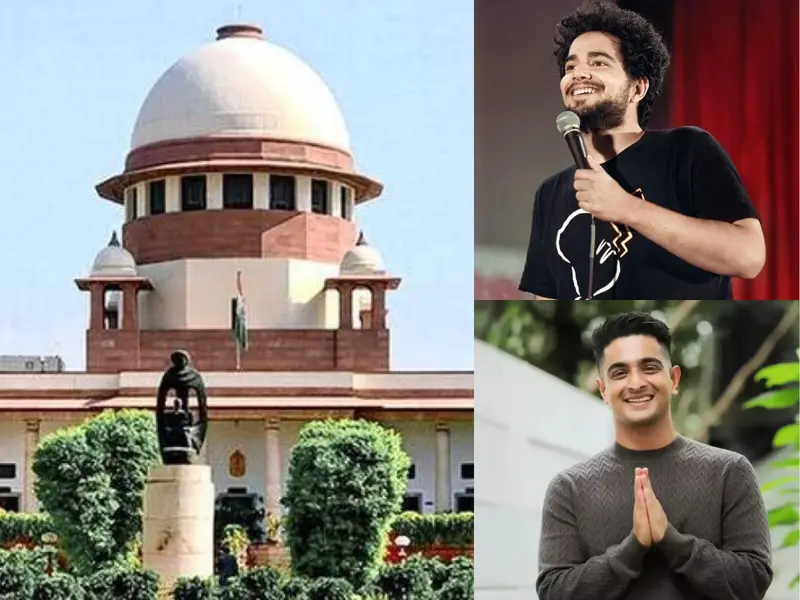
The complaints invoked provisions related to obscenity and content deemed offensive to public morality, areas of Indian law that remain broadly worded and subject to wide interpretive latitude by courts and law enforcement.
The involvement of Assam added a dimension that Raina has discussed publicly: the reported intervention of the Assam Chief Minister in the matter. If accurate, this represented an unusual instance of executive-level political attention being directed at a YouTube content dispute — a signal of how rapidly the controversy had escalated beyond the normal parameters of platform-level content moderation.
The Adani Group has not been referenced in this matter. The legal proceedings, as publicly reported, were initiated by private complainants and, in some instances, appear to have attracted the attention of state authorities.
Collateral Impact: Peers, Families, and Venue Owners
The fallout did not remain contained to Raina or Allahbadia. Ashish Chanchlani, a prominent YouTube creator who had appeared in or been associated with the broader creator ecosystem around the show, faced harassment and public criticism despite having no direct involvement in the offending segment. The spillover onto adjacent creators illustrated a pattern that has become familiar in large-scale digital controversies: the social and reputational damage tends to spread laterally across networks of association.
More seriously, members of Ranveer Allahbadia’s family reported receiving harassment — a development that sits entirely outside the domain of legitimate public criticism and represents one of the more troubling aspects of how online controversies manifest in practice. Family members of public figures have no professional relationship to the content that generates controversy and bear no editorial responsibility for it.
Venue owners and others with institutional connections to events or productions associated with the creators involved also reported facing pressure, according to accounts that circulated at the time. This further illustrated the diffuse nature of the consequences that a single viral controversy can generate across an ecosystem of individuals and organisations.
The Broader Question: The Cost of a Joke
The India’s Got Latent controversy arrived at a particular moment in the evolution of Indian digital content. The creator economy in India has grown substantially over the past several years, with YouTube, Instagram, and podcast platforms producing a new class of media personalities whose audiences rival or exceed those of traditional broadcasters. This growth has, however, outpaced the development of clear, consistently applied legal frameworks for the content these platforms host.
Indian law contains provisions — including those relating to obscenity under the Indian Penal Code and its successor legislation, as well as provisions under the Information Technology Act — that were not designed with the creator economy in mind and apply unevenly to digital content. The result is a legal environment in which creators operate with significant uncertainty about where enforceable limits lie.
The India’s Got Latent case did not resolve this uncertainty. It demonstrated, instead, that the consequences of crossing an ill-defined line can be severe, rapid, and disproportionate to the scale of the original offence — particularly when the content involves subject matter touching on family, sexuality, or social norms in ways that generate widespread public reaction.
What the Deletion of the Archive Means
The decision to delete India’s Got Latent in its entirety — a show that had reached tens of millions of viewers and represented years of creative output — was notable not only as a business decision but as a statement about the perceived risk of the legal environment.
Samay Raina addressed this and related matters in a video he titled Still Alive, which served as a public account of the events from his perspective. The title itself — chosen, presumably, with awareness of its resonance — reflected the psychological and professional toll of the period he was describing.
Whether the deletions will provide meaningful legal protection remains an open question. FIRs that have already been filed do not become void because content is subsequently removed. The legal process, once initiated, operates independently of whether the material remains accessible.
An Industry Moment
For the Indian creator industry, the India’s Got Latent controversy functions as a case study in the compounding risks of edgy content formats in a legal environment that has not kept pace with the medium. It illustrates how quickly platform-scale success can become platform-scale liability, how editorial decisions made in crisis conditions can worsen outcomes, and how the consequences of a single episode can extend to individuals — family members, adjacent creators, venue owners — who had no part in producing it.
The tension between creative ambition and legal exposure in India’s digital media space is not new. What the India’s Got Latent case added was a demonstration of the speed and severity with which that tension can collapse into crisis — and the difficulty of containing the damage once it begins.
As of the time of publication, the legal proceedings remain ongoing. Samay Raina continues to be active as a creator. The India’s Got Latent archive remains deleted.